
Sparados Review 2026: Corporate Cards & Expense Management
Sparados Review 2026: Corporate Cards and Expense Management
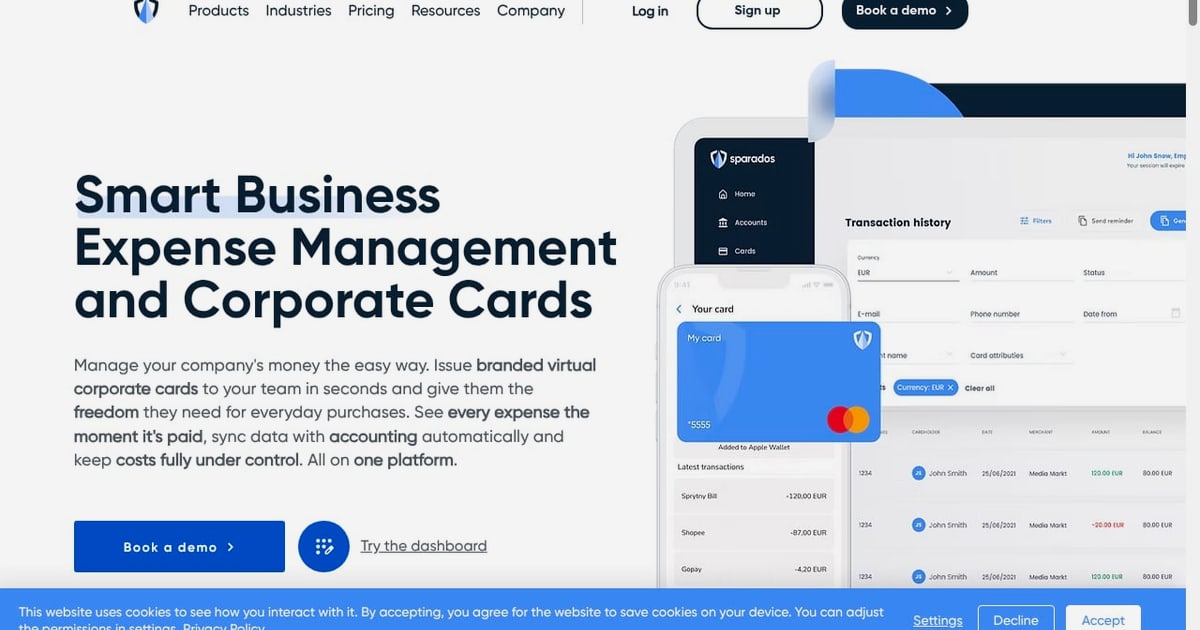
Sparados is a business expense management and virtual corporate card platform that lets you issue branded virtual cards in seconds, track spending in real time, and connect transactions to your accounting system. This review examines its features, ideal users, strengths, limitations, pricing signals, setup process, and decision criteria so you can judge whether it fits your finance stack.
What Sparados offers
First viewport screenshot of www.sparados.com.
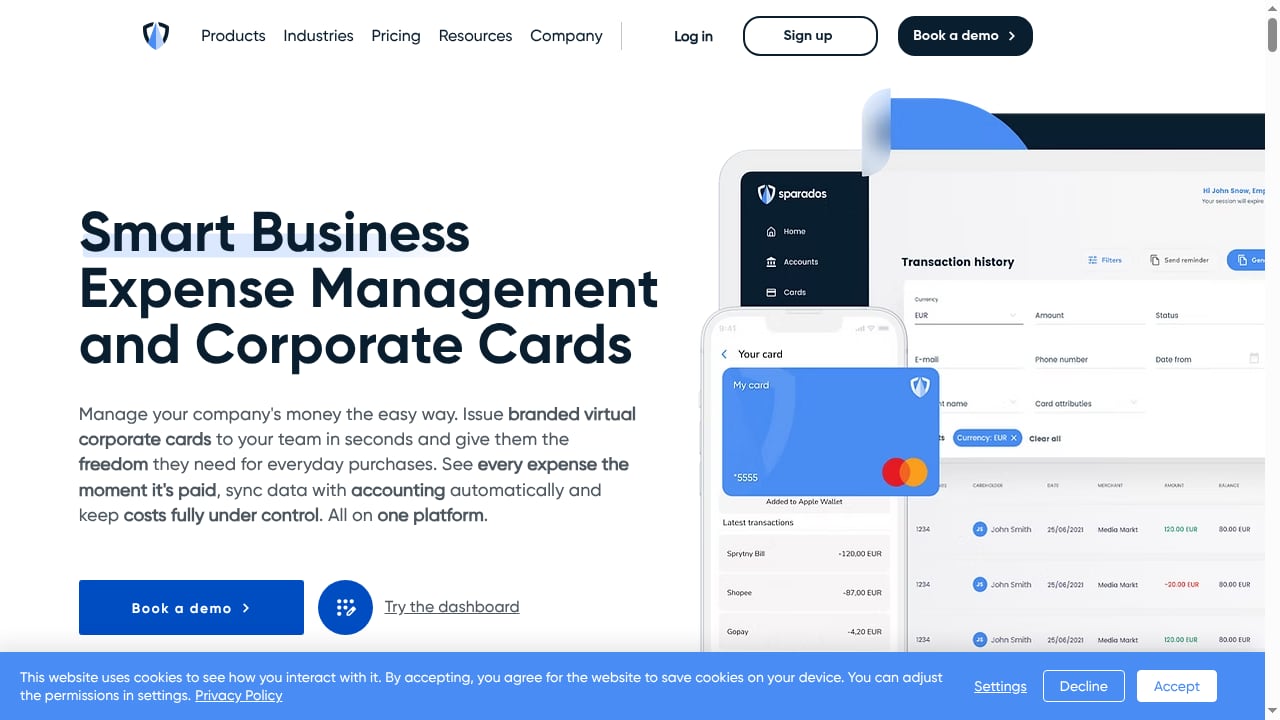
Sparados combines two functions that are often split across separate tools: card issuing and expense management. The platform provides virtual corporate cards that can carry your company logo, real-time transaction feeds, and accounting integrations. The goal is to give finance teams a single view of company spending without chasing receipts or manually reconciling card statements.
Key capabilities include:
- Virtual card issuance: Create virtual cards instantly for employees, departments, or specific vendors. Cards can be branded with your company logo.
- Real-time expense tracking: Every transaction appears in the platform as it happens, giving finance teams live visibility into spend.
- Accounting connection: Sync transactions and expense data with your accounting software to reduce manual reconciliation.
- Centralized spend control: Manage cards, limits, and spending policies from one dashboard.
Who Sparados is for
First viewport screenshot of www.sparados.com.
Sparados is best suited to small and mid-sized businesses that want to move away from shared physical cards and manual expense reports. It fits teams that need:
- Distributed teams and remote employees who require virtual cards for online purchases, subscriptions, and vendor payments without mailing physical cards.
- Finance teams tired of receipt chasing and month-end reconciliation marathons.
- Businesses with recurring software spend (SaaS subscriptions, AI tools, cloud services) that want per-vendor cards with clear limits.
- Companies already using accounting software that want transaction data to flow automatically into their books.
It is less suited to organizations that need physical cash withdrawals, complex multi-entity procurement workflows, or highly customized approval chains beyond standard spend controls.
Use cases and practical examples
Virtual cards for software subscriptions
A marketing team subscribes to multiple AI and design tools. Instead of one shared card, Sparados lets finance issue a separate virtual card per vendor with a fixed monthly limit. If a subscription price changes unexpectedly, the transaction is visible in real time and can be flagged immediately.
Department-level spend control
A sales team needs cards for travel bookings and client entertainment. Finance issues virtual cards with limits set by department and merchant category. Managers see transactions as they occur, and receipts can be attached digitally, reducing the need for end-of-month expense reports.
Accounting sync for faster close
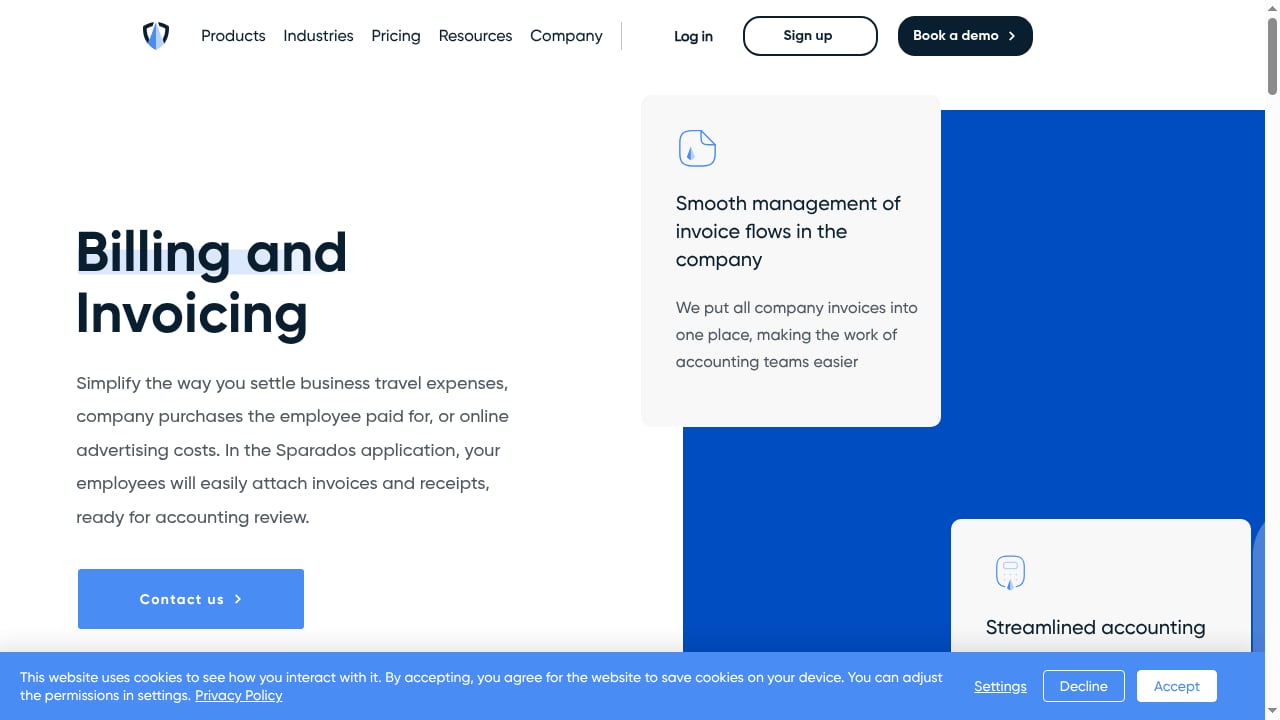
A startup uses Sparados cards for operational expenses. Transactions sync to its accounting platform with merchant data and categories, so the bookkeeper spends less time matching statements to receipts and more time on analysis.
Strengths
- Fast virtual card issuance: Cards can be created in seconds, which is useful for one-off vendor payments or new hires who need spending capability immediately.
- Real-time visibility: Live transaction feeds help finance catch unauthorized or unexpected spend before month-end.
- Branded cards: Company-logo virtual cards add a professional touch and can reinforce policy compliance.
- Accounting integration: Direct sync reduces manual data entry and reconciliation errors.
- Unified platform: Cards and expense management in one place means fewer tools to manage and less data fragmentation.
Limitations
- Virtual-only focus: Businesses that need physical cards for travel or in-person purchases may need a supplementary provider.
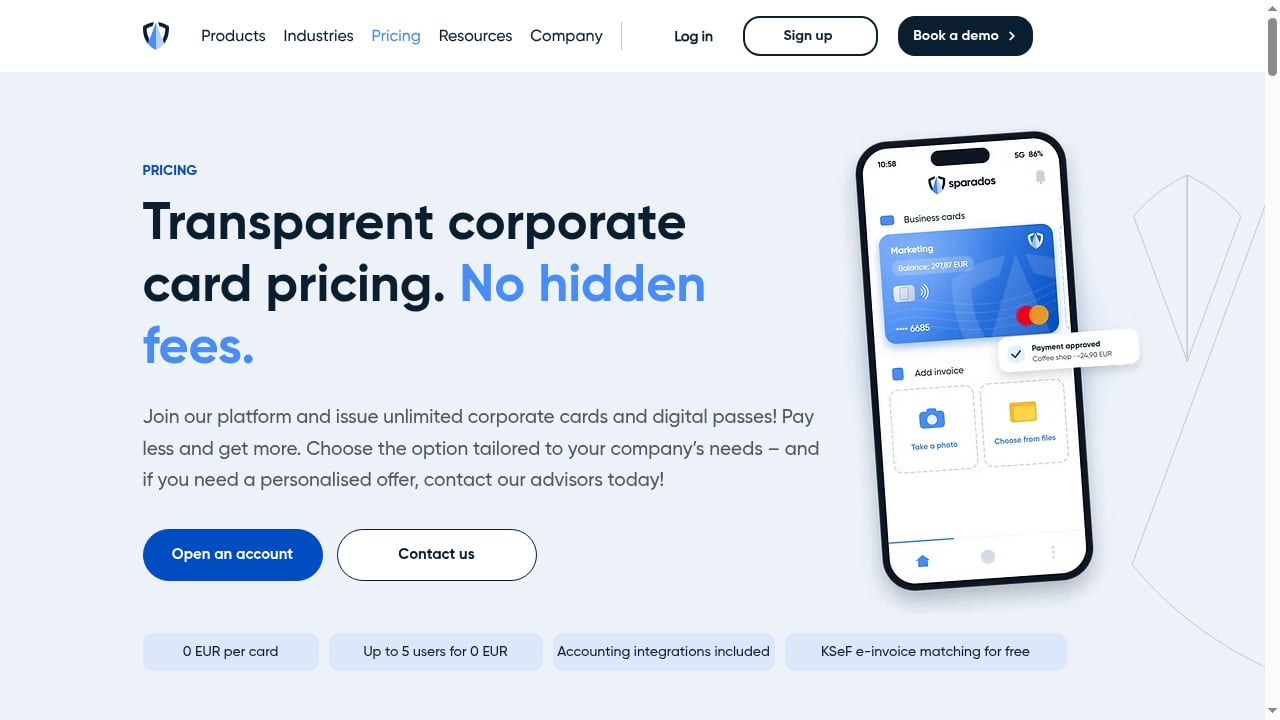
- Limited public pricing detail: Sparados does not publish full pricing on its website, so you will need to request a quote or demo to understand costs.
- Scalability for complex organizations: Large enterprises with multi-entity accounting, complex procurement, or highly customized approval workflows may find the platform less flexible than enterprise-grade spend management suites.
- Regional availability: As with many fintech platforms, card availability and features may vary by country and regulatory environment.
Pricing signals

First viewport screenshot of www.sparados.com.
Sparados does not publicly list standard pricing tiers. Based on typical virtual card and expense management platforms, you should expect pricing to depend on:
- Number of active cards or users
- Transaction volume
- Additional features such as accounting integrations or advanced controls
- Contract length and company size
When evaluating cost, ask for a breakdown of card issuance fees, monthly platform fees, transaction fees, foreign exchange fees, and any charges for accounting sync or support. Compare the total cost against the time saved on reconciliation and the risk reduction from real-time spend visibility.
Setup and onboarding
Setup typically involves:
- Business verification: Provide company registration details and identify authorized users.
- Accounting connection: Link your accounting software to enable transaction sync.
- Card design and issuance: Upload your logo and configure virtual cards for users or departments.
- Policy configuration: Set spending limits, merchant category restrictions, and approval rules.
- Team rollout: Invite employees, assign cards, and communicate spending policies.
The speed of onboarding depends on the completeness of your business documentation and the complexity of your accounting setup. A guided demo is recommended to confirm integration compatibility before committing.
Decision criteria: is Sparados right for you?
First viewport screenshot of www.sparados.com.
Consider Sparados if:
- You want to eliminate shared physical cards and manual expense reports.
- Your team makes most purchases online or via subscription.
- You need real-time visibility into spend without building a custom solution.
- You value a single platform for cards and expense tracking.
Look elsewhere if:
- You need physical cards for frequent in-person spending.
- You require advanced procurement features like purchase orders and multi-level approvals.
- You operate in a region where Sparados cards are not supported.
- You need transparent, self-serve pricing before a sales conversation.
For businesses comparing broader crypto-native or stablecoin-funded card options, see our Cardfornia vs Reap vs Banxe comparison and our OneSafe neo-banking review. If your main need is paying for AI subscriptions with a crypto card, our guide to crypto cards for AI subscriptions covers that use case in detail.
Related reading
- Request Finance Review 2026: Stablecoin Business Account - Evidence-based Request Finance review: stablecoin business account features, pricing from $50/mo, KYB setup, ideal users, limitations, and alternatives.
- Wirex Review 2026: Crypto Wallet, Cards & Payments Tested - Evidence-based Wirex review for 2026: card tiers, real cashback math, fees, limits, setup, regional availability, and who should use it.
- Cryptopay Business Review 2026: Crypto Payments for Merchants - Evidence-based Cryptopay Business review: crypto payment gateway features, fiat settlement, payouts, fees, setup, limitations, and who it fits in 2026.
Sources and further reading
- Any tried and tested takes on best corporate card programs for small businesses? : r/fintech - For a small business with distributed sales team, Ramp is probably your best bet. The cashback is 1.5% flat with no categories to optimize around, the expense management is genuinely good, and the controls for distributed teams work well. You can issue virtual cards instantly for specific vendors or spending categories and set per-card limits. The receipt matching and auto-categorization saves real time compared to chasing salespeople for expense reports.
FAQ
Does Sparados issue physical cards?
Sparados focuses on virtual corporate cards. If you need physical cards for travel or in-person purchases, you may need a supplementary provider.
Can I connect Sparados to my accounting software?
Yes, Sparados supports accounting connections to sync transactions and expense data. Confirm compatibility with your specific accounting platform during onboarding.
How much does Sparados cost?
Pricing is not publicly listed. You will need to contact Sparados for a quote based on your card volume, transaction volume, and feature requirements.
Is Sparados suitable for small businesses?
Yes, Sparados is designed for small and mid-sized businesses that want virtual cards and expense management in one platform. Larger enterprises with complex procurement needs may require a more configurable solution.
How long does setup take?
Setup time varies based on business verification and accounting integration. Virtual cards can typically be issued quickly once your account is approved.
Conclusion
Sparados offers a focused solution for businesses that want virtual corporate cards and real-time expense management without the overhead of traditional card programs. Its strengths lie in fast card issuance, live spend visibility, and accounting integration. The main trade-offs are the virtual-only card model and limited public pricing information. For small and mid-sized teams with predominantly online spending, Sparados is worth a serious look—especially if reducing reconciliation work and gaining real-time control are priorities. Request a demo, confirm accounting compatibility, and compare total costs against your current process before deciding.
For further context on corporate card platforms and expense management trends, see Gartner Peer Insights on expense management software and PEX's comparison of corporate card platforms.