
Coinbase Review 2026: Fees, Safety, and Who It Fits
Coinbase Review 2026: Buy and Sell Bitcoin, Ethereum, and More With Trust
Coinbase markets itself as the trusted on-ramp to crypto, and for a lot of people that framing holds up: bank-style signup, regulated US entity, a publicly traded parent company, and a mobile app that does not assume you know what an order book is. The friction starts later, when you trade often enough that spreads and simple-mode fees become a real line item, or when a hold on your account blocks a withdrawal you needed that week.
This review walks through how Coinbase actually works in 2026: what the simple app does well, where Advanced Trade changes the math, what the fee and deposit tables look like, how custody and self-custody differ, and which user profiles get real value versus which ones should compare alternatives first.
What Coinbase is and how it makes money
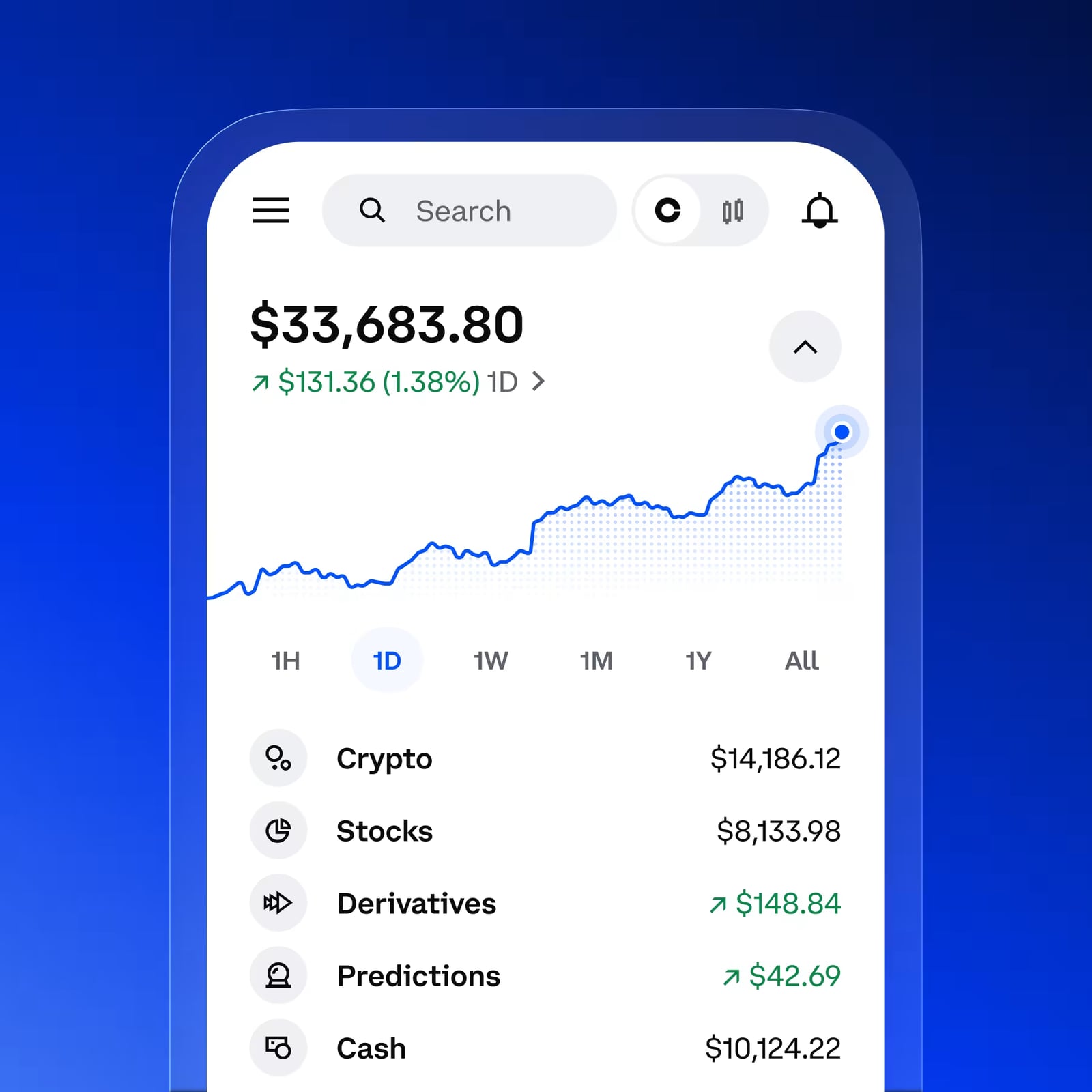
Coinbase - Buy and Sell Bitcoin, Ethereum, and more with trust product interface.
Coinbase is a US-based exchange and custodial platform. You can buy, sell, convert, transfer, and store crypto, and in some regions the same account also exposes stocks, staking, and prediction or derivatives products through separate legal entities.
Its revenue model is worth understanding before you sign up, because it explains most of the friction you will feel:
- Transaction spreads and fees on simple buys and sells, which are the widest and least transparent part of the pricing.
- Advanced Trade maker/taker fees, which are volume-based and much closer to what active traders expect from a major exchange.
- Subscription revenue from Coinbase One, which bundles reduced or zero fees on eligible simple trades plus extras like boosted USDC rewards and priority support.
- Institutional and custody services, including a NYDFS-regulated custody entity used by large clients.
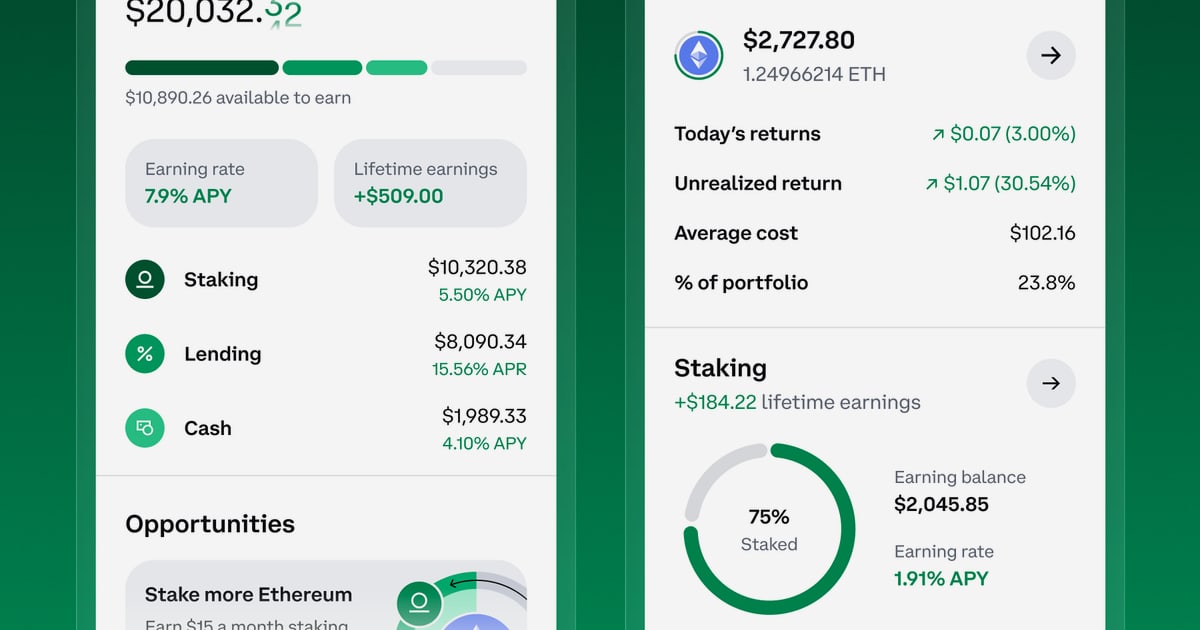
- Staking commissions, where Coinbase takes a cut of rewards before passing the rest to you.
That mix matters because the same platform can be expensive or competitive depending on which surface you use. A $200 buy in the simple app and a $200 limit order in Advanced Trade are not the same product, even though both sit under the Coinbase login.
Ideal users and real use cases

Coinbase - Buy and Sell Bitcoin, Ethereum, and more with trust product interface.
Who gets the most out of Coinbase
- First-time buyers who want a familiar checkout flow, Apple Pay or bank transfer, and a portfolio screen that does not require chart literacy.
- Long-horizon accumulators using recurring buys on a daily, weekly, or monthly schedule to dollar-cost average into Bitcoin or Ethereum.
- US users who value regulatory clarity and prefer an exchange with public financial disclosures, S&P 500 inclusion, and a documented policy center they can read before moving funds.
- Teams and individuals who need a clean fiat on-ramp before moving assets into self-custody or into a payment workflow.
Use cases where Coinbase is a reasonable default
- Setting up a first Bitcoin or Ethereum position with a small initial purchase.
- Scheduling automatic recurring buys and ignoring short-term price noise.
- Converting between assets without leaving a custodial account.
- Holding USDC and earning rewards through a subscription tier, if the current rate and terms still suit you.
- Using Coinbase as the funding leg before moving stablecoins into operational spending tools.
Use cases where it is the wrong tool
- High-frequency trading where every basis point of spread matters.
- Anyone who wants full control of private keys from day one.
- Businesses that need programmable spend controls, per-transaction limits, or card issuance tied to a treasury balance. That is a different product category, and it is worth comparing dedicated infrastructure rather than forcing an exchange account to behave like a spend platform. If that is your situation, start with virtual card issuing platforms and high-limit crypto cards before assuming Coinbase covers it.
How to set up a Coinbase account
Coinbase - Buy and Sell Bitcoin, Ethereum, and more with trust product interface.
- Create the account with an email, strong password, and two-factor authentication. Use an authenticator app rather than SMS if you can.
- Complete identity verification. Expect a government ID and a selfie check. Approval is usually fast but can take longer if your details need manual review.
- Link a funding method. ACH bank transfer is the cheapest option in the US. Wire, SEPA, SWIFT, PayPal, and card funding exist but carry different cost and speed profiles.
- Make a small test purchase before committing a large amount, so you can see the actual spread and fee applied to your order.
- Decide on custody. Leaving assets on the exchange is convenient; moving them to Coinbase Wallet or another self-custody wallet puts the keys in your hands and the responsibility on you.
- Set recurring buys if your plan is accumulation rather than trading.
Fees and pricing signals
The honest summary is that Coinbase pricing is tiered by behavior, not by a single published rate.
| Activity | Cost signal |
|---|---|
| Simple buy/sell | Spread plus a convenience fee; widest on small, frequent trades |
| Advanced Trade | Maker/taker schedule that improves with 30-day volume |
| ACH deposit (USD) | Typically free |
| Wire deposit (USD) | Around $10 in |
| Wire withdrawal (USD) | Around $25 out |
| SEPA (EUR) | Small fixed fee in, generally free out |
| SWIFT (GBP) | Free in, small fixed fee out |
| Card purchase | Up to roughly 3.99% |
| PayPal funding | Percentage-based, with different terms for stablecoin funding |
| Coinbase One | Monthly subscription from around $4.99, with plan limits on zero-fee simple trades |
Three practical takeaways:
- Small, frequent simple-mode buys are the most expensive habit on the platform. If you buy weekly, compare the cost of doing it in Advanced Trade instead.
- Coinbase One only pays off above a certain monthly volume. Below that threshold, the subscription can cost more than the fees it removes.
- "Zero trading fees" is scoped. Advanced Trade, DEX activity, and derivatives sit outside that promise, and a spread can still apply.
Security, custody, and what is actually protected
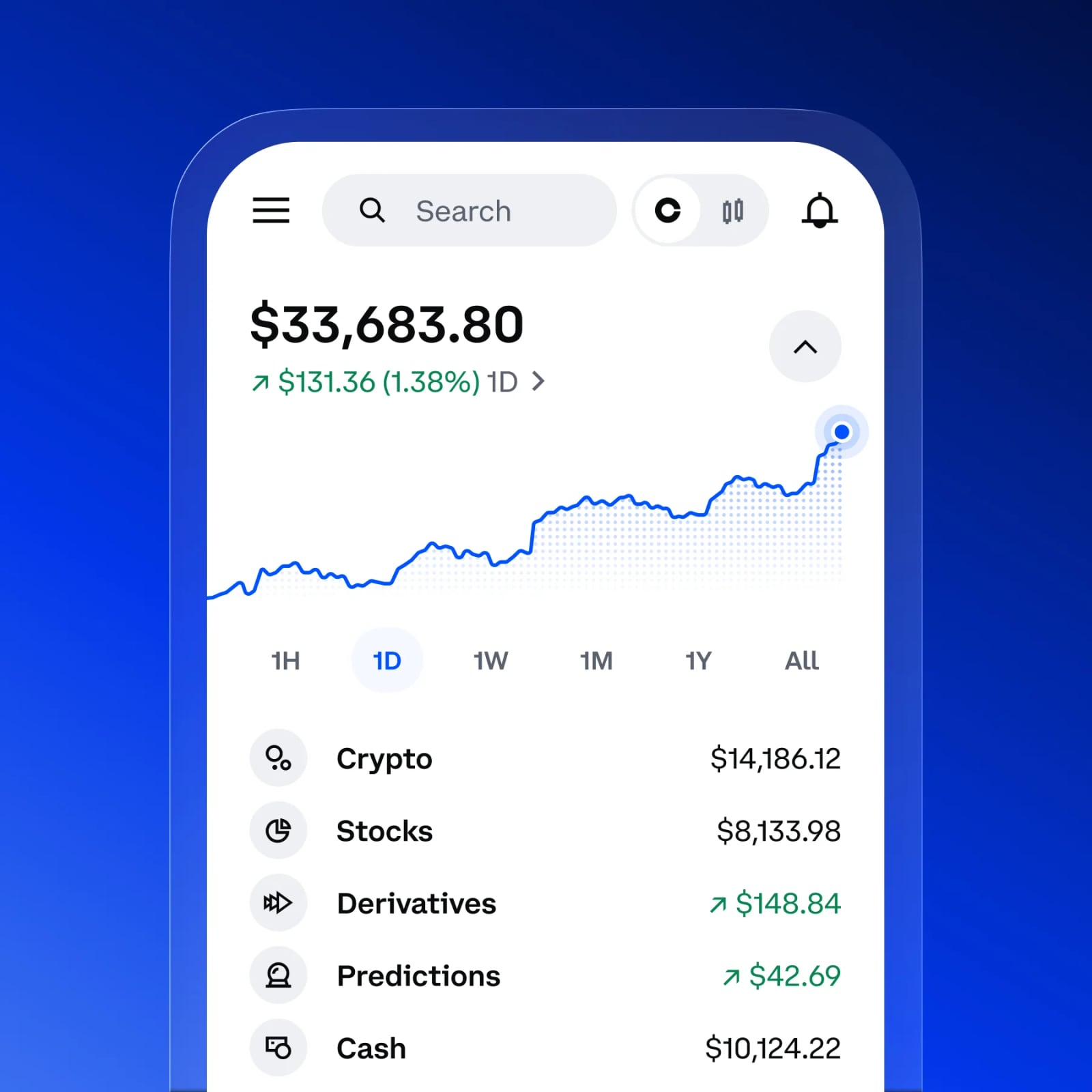
Coinbase - Buy and Sell Bitcoin, Ethereum, and more with trust product interface.
Coinbase's credibility signals are real and verifiable: a US-listed parent company trading as COIN, S&P 500 inclusion, regular financial disclosures, and institutional custody through a NYDFS-regulated entity. The platform has also served large government and institutional clients, which is a meaningful operational signal.
What that does not mean:
- Crypto holdings are not FDIC insured. FDIC coverage applies to cash in insured banking relationships, not to Bitcoin or Ethereum balances. Keep those two ideas separate when you assess risk.
- Exchange custody is custodial. You are trusting Coinbase's controls, not holding keys. Coinbase Wallet is a separate self-custody product where you control the keys and therefore the risk.
- Account holds happen. The most common complaint pattern in user reports is not theft but friction: verification reviews, withdrawal holds, and slow resolution timelines. Plan around it by keeping a small operational buffer outside the platform if you depend on fast access.
- Staking terms change. Reward rates, commissions, and regional eligibility shift over time, so verify current numbers in your own account rather than trusting a review.
Coinbase vs Coinbase Advanced vs Coinbase One
| Simple app | Advanced Trade | Coinbase One | |
|---|---|---|---|
| Best for | Beginners, occasional buys | Active traders | Frequent simple-mode users |
| Pricing model | Spread plus fee | Volume-based maker/taker | Subscription plus reduced fees |
| Order types | Market-style buys | Limit, stop, charts | Depends on surface used |
| Learning curve | Low | Moderate to high | Low, once subscribed |
| Main catch | Expensive per trade | Order-book literacy required | Plan limits and exclusions |
The pattern is consistent: Coinbase trades simplicity for cost, and cost for complexity. Pick the surface that matches your actual behavior, not the one that sounds most advanced.
Decision criteria: should you use Coinbase?
Work through these in order.
- How often will you trade? Occasional buys favor the simple app. Weekly or monthly activity favors Advanced Trade or a lower-cost exchange.
- Do you need fiat on-ramp reliability or lowest cost? Coinbase wins on reliability and regulatory comfort; it rarely wins on raw cost.
- Do you want custody or self-custody? If you want keys, plan the move to a self-custody wallet from the start.
- Do you need to spend, not just hold? Exchange accounts are not spend platforms. For recurring SaaS billing, ad spend, or team cards, look at one-click subscription setup cards and crypto payment cards for ad agencies instead.
- Are you operating across borders? Check fiat support in your region before assuming USD, GBP, or EUR rails are available to you.
- Can you tolerate a hold? If not, keep emergency liquidity outside the exchange.
Related reading
- Cardfornia vs Banxe vs Sparados: Which Card Platform Fits Your Business? - Compare Cardfornia, Banxe, and Sparados for corporate cards, crypto spending, and expense management. See strengths, limits, and how to choose the right fit.
- Meta Ads Crypto Payment: How to Pay with USDC in 2026 - Learn how to pay for Meta Ads with USDC and stablecoins, which wallets work, policy rules for crypto advertisers, and virtual card alternatives for teams.
Sources and further reading
- Coinbase - Buy and Sell Bitcoin, Ethereum, and more with trust - Coinbase is a secure online platform for buying, selling, transferring, and storing cryptocurrency.
- Coinbase – Buy & Sell Bitcoin, Ethereum, and more with trust - Coinbase is a secure platform that makes it easy to buy, sell, and store cryptocurrency like Bitcoin, Ethereum, and more. Based in the USA, Coinbase is available in over 30 countries worldwide.
- Coinbase Review 2026: Fees, Features, Safety & More - In our Coinbase review, we explore the crypto exchange's fee structure, trading features, and whether it is the right exchange for you.
FAQ
Is Coinbase safe to store crypto on?
It is one of the more heavily scrutinized custodial platforms, with public disclosures and regulated custody for institutional clients. That is not the same as insured, and it is not the same as holding your own keys. Treat exchange custody as a convenience with counterparty risk.
Are Coinbase fees high?
In simple mode, yes, especially on small and frequent trades. In Advanced Trade, fees are volume-based and far more competitive. The gap between the two is the single most important pricing fact about the platform.
What is the difference between Coinbase and Coinbase Advanced?
Coinbase Advanced is the trading interface with limit orders, charts, and a maker/taker fee schedule. The simple app is built for straightforward buys and sells at a wider spread.
Is Coinbase One worth it?
Only if your monthly simple-mode trading volume is high enough that the fee reduction exceeds the subscription cost. Check current plan limits, because zero-fee promises are scoped and exclude Advanced Trade, DEX, and derivatives activity.
Can I use Coinbase for business spending?
Not as a spend platform. It works as a funding and conversion layer, but card issuance, spend controls, and recurring billing belong to dedicated infrastructure. See how blockchain payments for businesses fit together before designing a workflow.
Does Coinbase support staking and USDC rewards?
Yes, in eligible regions, with rates and commissions that change over time. Verify current terms inside your account rather than relying on published reviews.
Conclusion
Coinbase earns its reputation as a trustworthy on-ramp: regulated, publicly accountable, and genuinely easy for a first-time buyer. The trade-off is cost and control. Simple-mode spreads are the most expensive way to accumulate crypto on the platform, and custodial holdings are not insured the way cash deposits are.
The practical playbook is to use Coinbase for what it does best, which is getting fiat into crypto reliably, then move to Advanced Trade if you trade with any regularity, and move to self-custody or a dedicated spend platform if you need control or operational payments. For deeper context on the exchange landscape and how it connects to payment infrastructure, see USDC similar tools compared.
This article is informational only and is not investment, legal, or tax advice. Verify current fees, rates, and regional availability directly with Coinbase before making decisions.