
Cardfornia vs Wirex: Best Crypto Card for Business?

Cardfornia vs Wirex: Which Crypto Card Fits Your Business in 2026?
If you run a crypto-native company, the card you hand your team is not a lifestyle accessory. It is an operating expense control system. Wirex is one of the best-known names in crypto payments, with a wallet, exchange, and cards trusted by millions of consumers. Cardfornia is a newer, Singapore-based platform built specifically for corporate crypto spending.
This comparison looks at where each one genuinely fits, using the evidence available from Wirex's own materials and independent reviews, and from Cardfornia's stated product design. The goal is not to declare a universal winner. It is to help you decide which tool matches how your business actually spends.
Quick Verdict
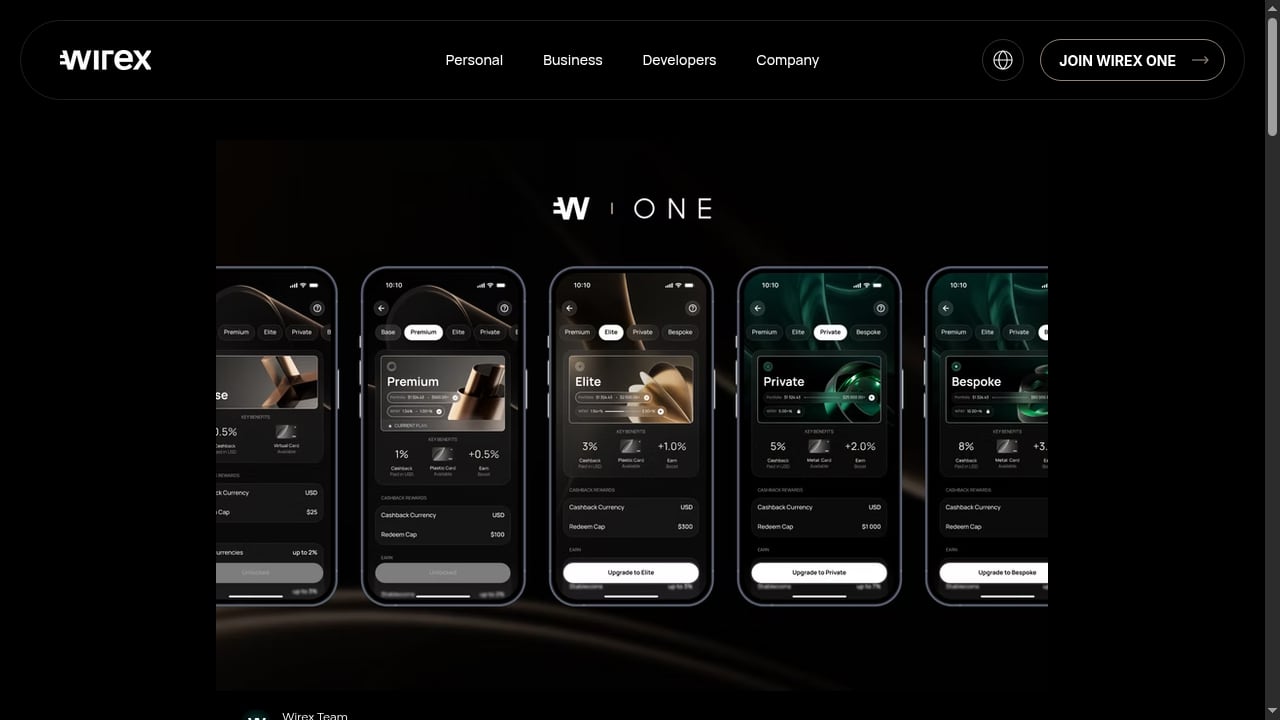
First viewport screenshot of Business.
- Choose Cardfornia if you are a company or startup that holds stablecoins (USDT, USDC) and needs to issue multi-currency virtual cards to many team members, control spend in real time, and pay for AI tools, ads, SaaS, and travel from one funded account.
- Choose Wirex if you are an individual or a small operator who wants a consumer wallet with a card, exchange, cashback, and interest-earning accounts in one app, and you are comfortable with the WXT token economy.
- Consider both if your company has a treasury function and a personal-spending need, but keep the corporate card separate from personal rewards programs.
What Each Platform Actually Is
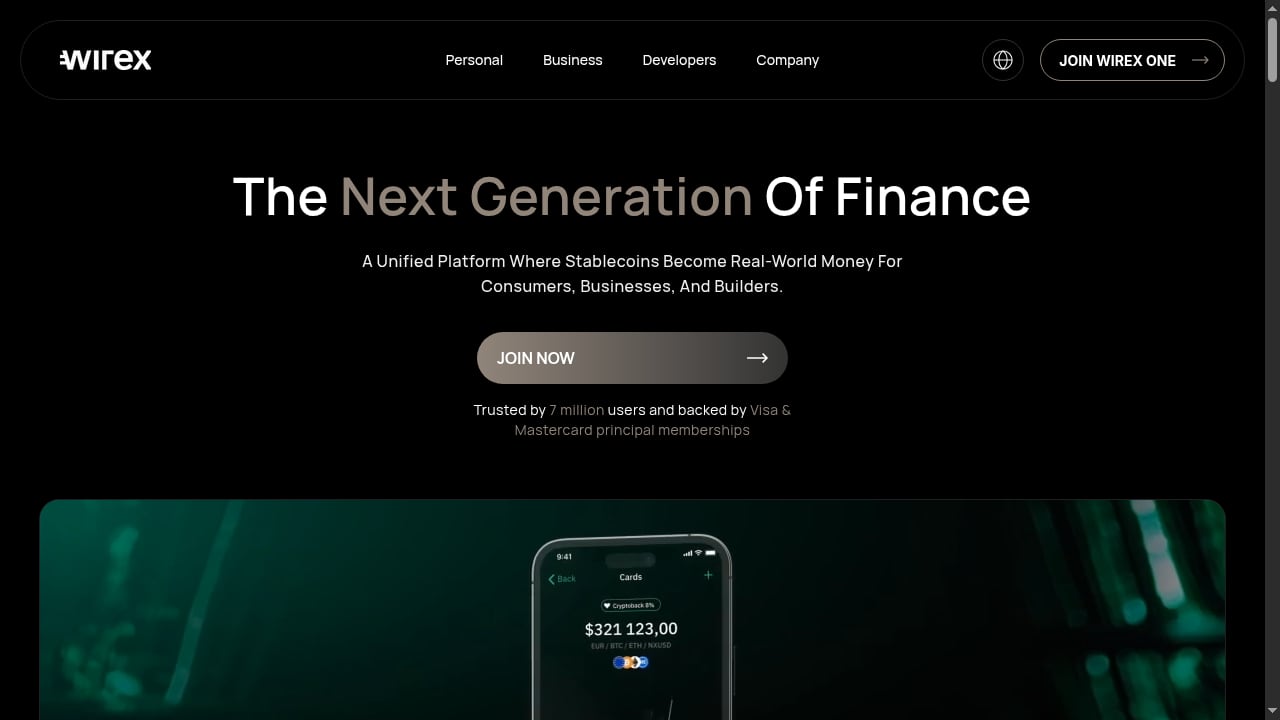
First viewport screenshot of Wirex | Crypto Wallet, Cards & Payments for All.
Cardfornia: a corporate crypto card platform
Cardfornia is a Singapore-based fintech founded in 2026. It provides crypto virtual cards designed for corporate businesses and startups. Organizations fund a single account with stablecoins such as USDT and USDC, then issue multi-currency virtual cards to teams at scale while maintaining real-time control over operating expenses.
The stated use cases are operational: paying for AI tool subscriptions (ChatGPT, Claude, Midjourney), digital advertising on Meta Ads, Google Ads, and TikTok Ads, SaaS and cloud services (AWS, Azure, Figma), and global travel and procurement. Cardfornia emphasizes high-limit cards for ad spend to reduce account ban risk, automatic multi-currency settlement for SaaS, and real-time currency exchange for cross-border transactions.
On custody, Cardfornia states that client funds are held 100% in segregated accounts with third-party licensed custodians, never lent or invested. Security practices are guided by ISO/IEC 27001 standards, and payment, custody, and card-issuing activities are performed through licensed partners holding regulatory approvals across jurisdictions including Hong Kong, the UK, the US, and Canada.
Wirex: a consumer crypto wallet and card
Wirex was founded in 2014 and is based in the UK. It is a multi-currency platform supporting a large number of cryptocurrencies and fiat currencies, with Visa and Mastercard cards attached. It offers an integrated exchange, interest-earning X-Accounts, and a rewards program called Cryptoback™ that pays cashback in WXT, Wirex's native token.
Wirex is trusted by over 7 million users and holds principal memberships with Visa and Mastercard. It is licensed and regulated by the Financial Conduct Authority (FCA) and the Monetary Authority of Singapore (MAS), according to independent review coverage. The platform is evolving into Wirex One, a next-generation offering that supports AI-powered agent-initiated payments on stablecoin rails.
Wirex also markets Wirex Business, which unifies stablecoins, fiat accounts, and Visa cards for global payments, treasury management, and spending. So the honest framing is not "consumer-only versus corporate-only." It is "broad consumer platform with a business offering" versus "purpose-built corporate card platform."
Head-to-Head Comparison
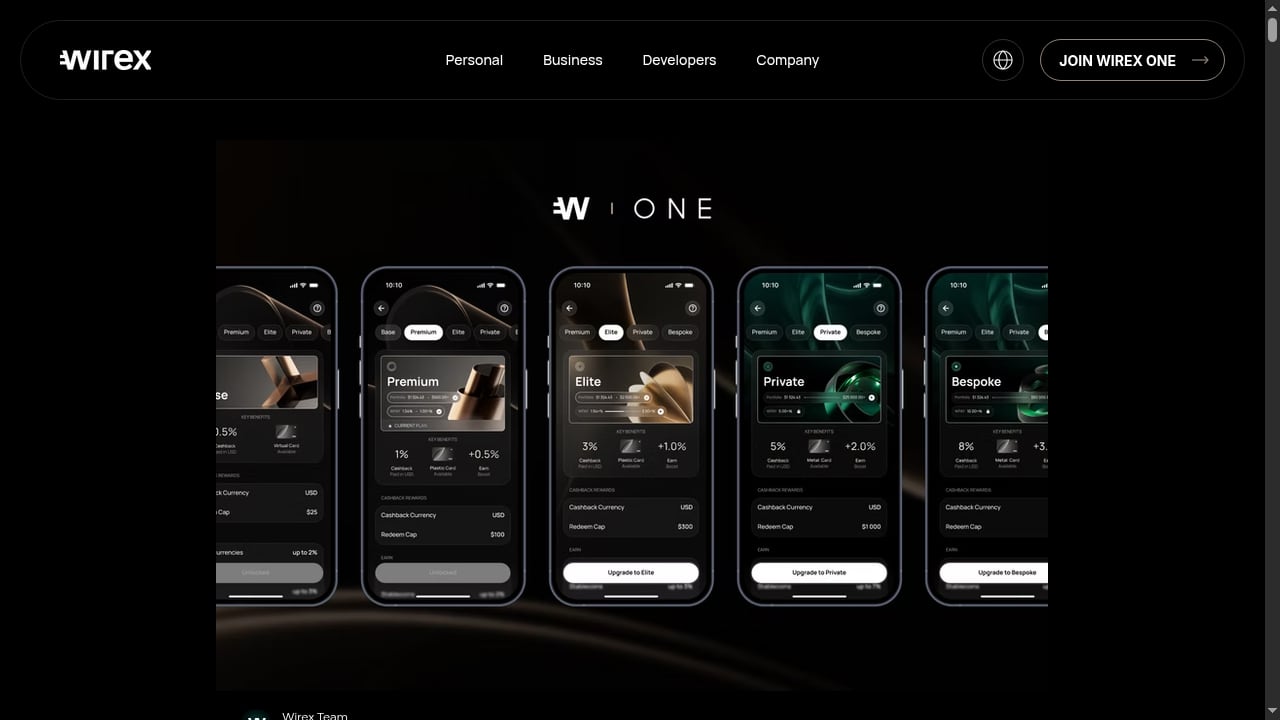
First viewport screenshot of Wirex | Crypto & Web3 Insights, Guides & News.
1. Primary user and design intent
Wirex is designed for a wide audience: consumers, businesses, and builders. Its app is feature-rich, supporting a large asset list, exchange, savings, and rewards. That breadth is a strength for individuals and a potential distraction for a finance team that just needs controlled cards.
Cardfornia is designed around the corporate account. The unit of design is the team, not the individual. Cards are issued to team members at scale from one funded account, and the spending controls are framed around operating expenses rather than personal rewards.
Practical example: A 30-person startup paying for ChatGPT Team, Figma, and AWS across five departments needs 30 cards, per-card limits, and a single funding source. That is a corporate card workflow. A solo founder paying for a personal Netflix subscription and occasional travel is a consumer wallet workflow.
2. Funding and settlement
Cardfornia funds a single account with stablecoins such as USDT and USDC, then issues multi-currency virtual cards against that balance. It highlights automatic multi-currency settlement for SaaS and real-time currency exchange for cross-border transactions. For a company whose treasury already sits in stablecoins, this avoids repeated manual conversions.
Wirex supports stablecoins and fiat, and its business offering advertises 1:1, fee-free fiat-to-stablecoin conversion and instant settlement. Its consumer card converts crypto to fiat at the time of the transaction. Independent fee analysis notes that Wirex crypto-to-fiat conversion carries a spread of roughly 1–2% depending on the asset and region.
What this means for you: If your company holds USDC and pays vendors in several currencies, compare the all-in conversion cost, not just the headline fee. A spread that looks small on a single transaction compounds across hundreds of SaaS renewals.
3. Fees and rewards
Wirex's headline reward is up to 8% cashback through Cryptoback™, paid in WXT. The important nuance, documented in independent comparisons, is that the base rate without a paid plan or WXT staking is around 0.5%. Reaching higher tiers requires a paid subscription (reported at approximately €9.99/month for Premium and €29.99/month for Elite) or staking a large amount of WXT. Cashback is paid in a volatile native token, so its effective value fluctuates with WXT's price. Wirex also advertises zero FX fees on card spending, with ATM withdrawals free up to a monthly cap and a fee thereafter, plus an inactivity fee and physical card shipping costs in most regions.
Cardfornia's value proposition centers on stability, security, and transparency rather than token rewards. Its stated differentiators are high-limit cards for ad spend, automatic multi-currency settlement, and real-time currency exchange. There is no native token tied to its rewards, which removes token price exposure from the equation but also means no cashback program of the Wirex type.
Decision rule: If cashback in a native token is a meaningful part of your economics, model the realistic tier, not the headline rate. If predictable operating cost is the priority, a no-token model is easier to forecast.
4. Custody and fund treatment
This is where the two platforms differ most sharply in stated design.
Cardfornia states that client funds are held 100% in segregated accounts with third-party licensed custodians, and are never lent or invested. Payment, custody, and card-issuing activities run through licensed partners with regulatory approvals across jurisdictions including Hong Kong, the UK, the US, and Canada. Security practices are guided by ISO/IEC 27001 standards.
Wirex offers interest-earning X-Accounts, with advertised rates up to 9.75% on savings and higher promotional figures in some materials. Earning products of this kind involve deploying balances to generate yield, which is a different risk profile from a pure segregated custody account. Independent reviews list X-Accounts and other earning models as a key Wirex pro, and also note that KYC is mandatory for access.
What this means for you: If your company policy forbids lending or investing client or operating funds, a segregated, non-yield custody model is the cleaner fit. If you are deliberately seeking yield on idle balances, that is a separate decision — and worth reading up on how stablecoin savings yield and risk actually work before committing treasury funds.
5. Geographic and feature availability
Wirex is available in many countries in theory, but independent analysis notes that card features are most fully supported in the UK, EEA, Singapore, Australia, and select other markets, with feature availability, fee structures, and cashback rates varying by region. The US is notably excluded from certain Wirex card features according to that coverage.
Cardfornia operates through licensed partners with regulatory approvals across Hong Kong, the UK, the US, and Canada, and positions itself for globally scaling businesses. For a company with entities or contractors in multiple jurisdictions, the practical question is which platform can issue cards to the specific people who need them.
6. Scale of card issuance
Wirex issues cards to individual account holders, including through its business offering. Cardfornia's stated model is issuing multi-currency virtual cards to teams at scale from a single funded account. If you need 5 cards, both can work. If you need 50 cards with different limits per department, the corporate issuance model is the more natural fit.
Where Wirex Is Genuinely Strong
First viewport screenshot of WirexApp.
A fair comparison should not pretend the substitute has no advantages. Wirex brings real strengths:
- Long track record. Founded in 2014, it has operated through multiple market cycles.
- Scale and network. Over 7 million users and principal memberships with Visa and Mastercard.
- Regulatory footprint. Licensed and regulated by the FCA and MAS according to independent review coverage.
- Breadth. Wallet, exchange, cards, transfers, and earning products in one app.
- Rewards for engaged users. For people already holding WXT and using paid tiers, Cryptoback™ can deliver meaningful value.
- 24/7 customer support. Highlighted as a pro in independent reviews, though live support may route to a ticket depending on the inquiry.
If your need is a personal multi-currency wallet with a card and you want to earn on balances, Wirex is a mature option. If you want to compare it against other established exchanges for buying and holding, our Coinbase review for 2026 covers a different corner of the same decision.
Where Cardfornia Is the Better Fit
Cardfornia's advantages are specific rather than universal:
- Built for corporate accounts. One funded account, many team cards, real-time expense control.
- Stablecoin-native funding. Fund with USDT or USDC directly, matching how crypto companies already hold treasury.
- High-limit cards for ad spend. Designed to reduce the account ban risk that comes with mismatched payment methods on ad platforms.
- Automatic multi-currency settlement. Useful for SaaS vendors billing in different currencies.
- Segregated, non-lent custody. Funds held with third-party licensed custodians, never lent or invested.
- No token exposure. No native token required to unlock features or rewards.
For teams whose biggest recurring pain is ad account stability, the payment method itself is part of the fix. Our guide to paying for Meta Ads with USDC explains how card choice interacts with platform policy and ban risk.
How to Choose: A Short Decision Framework
- Who is spending? Individuals → Wirex. Teams with departmental budgets → Cardfornia.
- What is your treasury in? Mixed fiat and crypto with yield goals → Wirex. Stablecoins like USDT/USDC → Cardfornia.
- Do you need rewards? If yes, model Wirex's realistic tier and WXT price risk. If no, a no-token model is simpler.
- What is your custody policy? If funds must never be lent or invested, prioritize segregated custody.
- How many cards? A handful → either. Dozens with per-card limits → corporate issuance.
- Where are your people? Check jurisdictional card availability before you commit.
If you are still mapping the category, our comparison of Cardfornia vs Banxe vs Sparados and the broader guide to choosing a virtual card issuing platform cover adjacent options.
Practical Setup Notes
Whichever platform you pick, the operational details decide whether the rollout succeeds:
- Separate personal and corporate cards. Mixing a rewards wallet with company spend creates reconciliation headaches.
- Set per-card limits before issuing. A card without a limit is a liability.
- Match the card to the vendor. Ad platforms, AI subscriptions, and cloud providers have different tolerance for prepaid and virtual cards.
- Plan reconciliation early. If you use Cardfornia, connecting it to your accounting workflow through the Tokenbooks integration automates much of the matching work.
- Review conversion costs monthly. Small spreads on frequent SaaS renewals add up faster than one-off large transactions.
Sources and further reading
- Cardaxo | Connecting Crypto with The Real World - Crypto Cards | Wallets | Payments | Rewards | Offers
- Wirex | Crypto Wallet, Cards & Payments for All - Wirex is a crypto wallet and payment platform with cards, exchange, yield products, and global transfers — simple, secure, and user-centric.
- Wirex Review - Crypto trading has become an activity that more and more people around the world partake in. That is why it’s more important to find a reliable and trustworthy crypto exchange platform now than ever before! In this Wirex review, we’ll be looking at one of the more interesting examples.Even though Wirex might not be as well known as some other large names in the industry, the Wirex app and card still has a pretty good variety of features that it can offer to its users.That said, though, is it wor...
FAQ
Is Cardfornia a direct replacement for Wirex?
Not exactly. Wirex is a broad consumer wallet and payment platform with a business offering. Cardfornia is a corporate crypto card platform focused on team card issuance, stablecoin funding, and operating expense control. They overlap on cards and crypto spending, but they are designed around different primary users.
Does Wirex offer business accounts?
Yes. Wirex markets Wirex Business, which unifies stablecoins, fiat accounts, and Visa cards for global payments, treasury management, and spending, with advertised zero FX and instant settlement. That said, Wirex's overall platform is built for consumers, businesses, and builders, while Cardfornia is built specifically around corporate accounts.
Is Wirex cashback really 8%?
Wirex advertises up to 8% cashback through Cryptoback™, paid in WXT. Independent analysis notes that the base rate without a paid plan or WXT staking is around 0.5%, and that reaching higher tiers requires a paid subscription or staking a large amount of WXT. The value of the cashback also depends on the WXT token price.
How does Cardfornia handle customer funds?
Cardfornia states that client funds are held 100% in segregated accounts with third-party licensed custodians and are never lent or invested. Payment, custody, and card-issuing activities are performed through licensed partners with regulatory approvals across jurisdictions including Hong Kong, the UK, the US, and Canada.
Can I use either platform to pay for ads and SaaS?
Both can be used for online payments. Cardfornia specifically emphasizes high-limit cards for ad spend to reduce account ban risk, plus automatic multi-currency settlement for SaaS and real-time currency exchange for cross-border transactions. If ad account stability is your main concern, that specialization matters.
Which is better for a startup with a stablecoin treasury?
If your company holds USDT or USDC and needs to issue cards to multiple team members with real-time controls, Cardfornia's model aligns more directly with that workflow. If you are an individual founder who also wants exchange, savings, and cashback features, Wirex covers more ground in one app.
Conclusion
Cardfornia and Wirex are not two versions of the same product. Wirex is a mature, widely used consumer finance platform that has expanded into business services, with a strong brand, large user base, regulatory licenses, and a token-based rewards economy. Cardfornia is a newer, purpose-built corporate card platform for companies that hold stablecoins and need controlled, scalable team spending.
The right choice depends on what you are optimizing for. If you want cashback, yield products, and a single app for personal and crypto finance, Wirex is a reasonable pick — just model the realistic reward tier and the WXT price exposure. If you want segregated custody, stablecoin funding, high-limit cards for ad spend, and card issuance across a whole team, Cardfornia is designed for exactly that job.
For most crypto-native companies, the deciding question is simple: are you buying a wallet with a card, or are you building an expense system? Answer that, and the choice usually makes itself.