
Cardfornia vs Reap vs Banqa: 2026 Crypto Card Comparison
Cardfornia vs Reap vs Banqa: 2026 Crypto Card Comparison
Stablecoin-funded corporate cards have moved from novelty to operational necessity for crypto-native companies. But the three platforms most often shortlisted in 2026 — Cardfornia, Reap, and Banqa — solve genuinely different problems. Cardfornia is built for corporate teams that need high-limit virtual cards funded by stablecoins. Reap positions itself as broad financial infrastructure with stablecoin cards, payout rails, and treasury tools. Banqa takes a self-custody approach, letting you spend USDC directly from your own wallet.
This comparison breaks down where each platform is strong, where the trade-offs sit, and which one matches your operating model.
How the three platforms differ at a glance
First viewport screenshot of Agentic Commerce: How AI Agents Pay.
| Criterion | Cardfornia | Reap | Banqa |
|---|---|---|---|
| Primary model | Corporate crypto virtual cards funded by stablecoins | Stablecoin-powered financial infrastructure | Self-custody Visa Infinite card |
| Custody of funds | Segregated accounts with third-party licensed custodians | Platform-managed accounts | User's own non-custodial wallet |
| Card type | Multi-currency virtual cards issued to teams at scale | Physical and virtual Visa corporate cards | Visa Infinite, personal and business plans |
| Best fit | Crypto-native companies and globally scaling startups | SMBs to large enterprises needing payouts plus cards | Individuals and businesses that want full key control |
| Notable strength | High-limit cards for ad spend and real-time FX | Cross-border payout corridors and fraud prevention | 0% deposit fees and multi-network USDC support |
Cardfornia: corporate virtual cards for stablecoin-funded teams
First viewport screenshot of Industry Insights | Reap Blog.
Cardfornia is a Singapore-based fintech platform founded in 2026 that provides crypto virtual cards designed specifically for corporate businesses and startups. Organizations fund a single account with stablecoins such as USDT and USDC, then issue multi-currency virtual cards to teams at scale with real-time control over operating expenses.
The platform's core use cases map closely to how modern crypto companies actually spend: AI tool subscriptions like ChatGPT, Claude, and Midjourney; digital advertising across Meta Ads, Google Ads, and TikTok Ads; SaaS and cloud services such as AWS, Azure, and Figma; and global travel and procurement.
Where Cardfornia stands out
- High-limit cards for ad spend. Advertising platforms are sensitive to payment failures and card churn. Cardfornia emphasizes high-limit cards specifically to reduce account ban risks that come from declined or inconsistent payments.
- Automatic multi-currency settlement for SaaS. Subscriptions billed in different currencies are settled automatically, which removes manual FX steps from recurring software costs.
- Real-time currency exchange for cross-border transactions. Teams paying vendors or platforms in multiple currencies get live conversion rather than batch settlement delays.
- Fund transparency and channel stability. Client funds are held 100% in segregated accounts with third-party licensed custodians and are never lent or invested. Security practices are guided by ISO/IEC 27001 standards, and payment, custody, and card-issuing activities run through licensed partners with regulatory approvals across jurisdictions including Hong Kong, the UK, the US, and Canada.
The founding team brings expertise from a well-known crypto card background, and the company positions itself as a technology company building corporate spending solutions for the digital-asset era.
If you want a deeper look at how stablecoin-funded cards work in practice, see our guide to the USDT virtual card and how it turns stablecoins into corporate spend.
Reap: stablecoin-powered financial infrastructure
First viewport screenshot of Product | Reap Blog.
Reap is a global financial infrastructure platform that leverages stablecoins to give businesses access to borderless finance. Rather than being only a card product, Reap bundles stablecoin-powered credit cards (physical and virtual Visa corporate cards), cross-border payment rails, treasury management, and embedded finance solutions.
The platform targets small and medium-sized businesses up to large enterprises, particularly digital-led or crypto-native companies that want to escape traditional banking constraints. Core use cases include fast, low-cost international payouts, managing corporate expenses with stablecoin cards, consolidating global treasury operations, and preventing payment fraud.
Where Reap stands out
- Direct access to local payout corridors across multiple countries. For companies paying contractors, suppliers, or staff in different regions, this is a meaningful operational advantage.
- Automated approval workflows via email notifications. Expense approvals happen without requiring every stakeholder to log into a dashboard.
- Transparent pricing with no hidden fees. Predictable cost structure matters when you are routing high volumes through payment rails.
- Documented fraud prevention results. A case study with Bitcoin.com describes how the company used Reap to resolve payment fraud and streamline spending — a concrete proof point rather than a generic claim.
Reap's ongoing expansion of payout corridors is aimed at improving speed and reducing costs, which suggests the infrastructure layer will keep deepening. If your priority is moving money across borders rather than issuing cards to a large team, Reap's infrastructure framing is worth weighing carefully.
Banqa: self-custody spending with USDC collateral
Banqa is a self-custody Visa Infinite card that lets users spend cryptocurrency for everyday purchases anywhere Visa is accepted. The card is backed by USDC held as collateral in the user's own non-custodial wallet, so users retain full control of their private keys.
Banqa supports personal and business plans. Features include 0% deposit fees, multi-network support across Base, Arbitrum, and Ethereum, and 24/7 support. For businesses, it offers per-employee cards with spending limits, KYB verification, accounting exports, and MCC controls.
Where Banqa stands out
- True self-custody. Funds stay in your own wallet until spent. For users who consider counterparty risk the primary concern, this is the strongest structural argument in Banqa's favor.
- 0% deposit fees. Loading costs are effectively eliminated, which matters for frequent top-ups.
- Multi-network USDC support. Base, Arbitrum, and Ethereum coverage gives flexibility in how and where you hold collateral.
- Broad acceptance. Visa Infinite acceptance means the card works in the same places as a conventional premium card.
Banqa's trade-off is inherent to its design: self-custody means you manage keys, wallet security, and network selection yourself. That is a feature for some teams and a burden for others.
Which platform fits which business
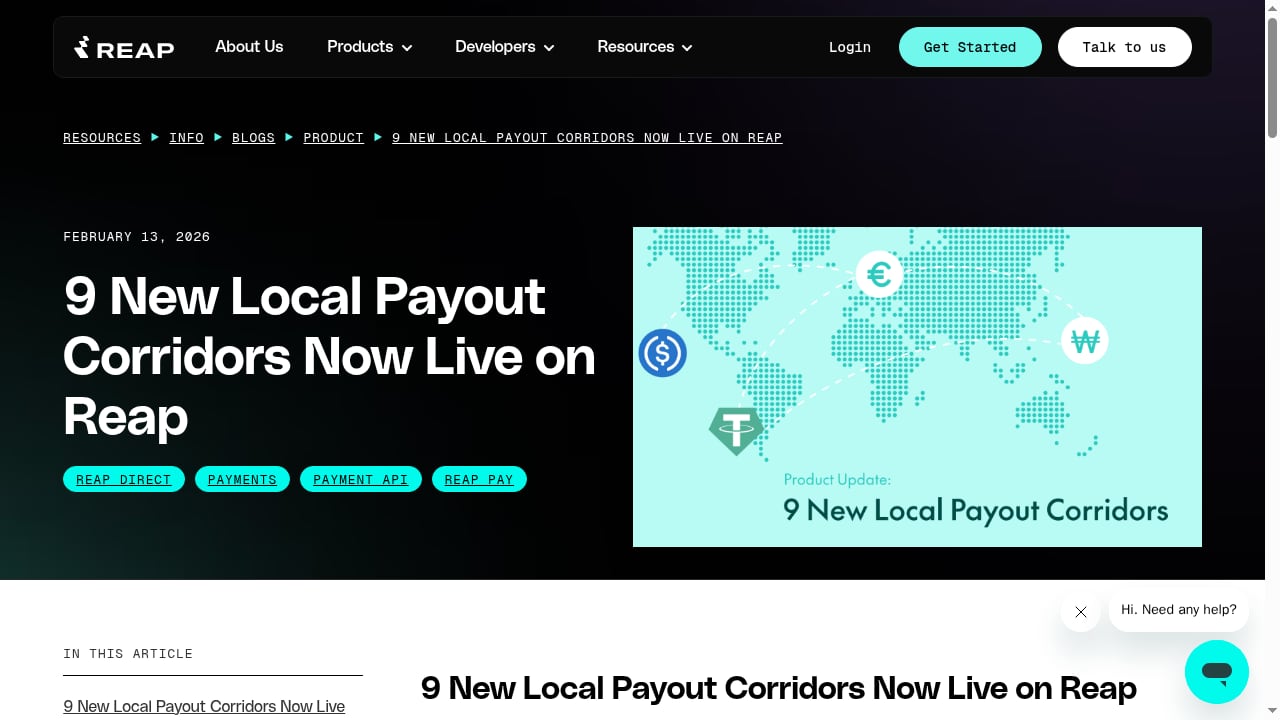
First viewport screenshot of 9 New Local Payout Corridors Now Live on Reap.
Choosing between these three is less about ranking them and more about matching structure to need.
Choose Cardfornia if:
- You are a crypto-native company or globally scaling startup that funds operations with USDT or USDC.
- You need to issue multi-currency virtual cards to many team members with real-time expense control.
- Advertising spend is a major cost line and you want high-limit cards to reduce account ban risk.
- You value segregated custody with licensed third-party custodians and ISO/IEC 27001-guided security practices.
Choose Reap if:
- Cross-border payouts are your primary pain point, not card issuance.
- You want cards, payout rails, and treasury management from a single infrastructure provider.
- You need automated approval workflows and transparent, predictable pricing.
- You are an SMB or enterprise that wants to consolidate global treasury operations.
Choose Banqa if:
- Self-custody is non-negotiable and you want to hold your own private keys.
- You prefer spending USDC collateral directly from a non-custodial wallet.
- You want 0% deposit fees and multi-network flexibility.
- You need per-employee cards with limits, KYB, and MCC controls but are comfortable managing wallet security internally.
For a broader view of how these trade-offs play out across other providers, see our comparison of Cardfornia vs Request Finance vs Banqa and our multi-currency crypto card business guide.
Practical example: a crypto startup's monthly spend stack
Consider a 25-person crypto startup with the following monthly costs:
- AI and SaaS subscriptions: ChatGPT, Claude, Figma, and AWS, billed in USD and EUR.
- Paid advertising: Meta Ads and Google Ads campaigns in three currencies.
- Contractor payouts: Designers in Southeast Asia and developers in Eastern Europe.
- Travel and procurement: Conference travel and hardware purchases.
A Cardfornia-style setup handles the subscription and advertising layers well: stablecoin funding, multi-currency virtual cards per team, and high limits for ad accounts. A Reap-style setup addresses the contractor payout layer through local corridors. A Banqa-style setup suits a founder who wants to keep USDC in self-custody and spend directly without moving funds to a platform.
Many teams end up combining approaches rather than picking one. The question is which layer you want to own and which you want to outsource.
Related reading
- Crypto Trading Explained: How It Works in 2026 - Learn how crypto trading works in 2026: spot vs derivatives, leverage, exchanges, wallets, and how businesses use stablecoins beyond speculation.
- Cardfornia vs OneSafe vs Sparados: 2026 Crypto Card Comparison - Compare Cardfornia, OneSafe, and Sparados for corporate cards in 2026: stablecoin funding, multi-currency spend, expense workflows, and team controls.
- Cross-Border Procurement Crypto: 2026 Business Guide - How cross-border procurement crypto works for businesses in 2026: stablecoin settlement, supplier payouts, corporate cards, FX risk, and controls.
Sources and further reading
- CardFornia Blog - Learn how crypto trading works in 2026: spot vs derivatives, leverage, exchanges, wallets, and how businesses use stablecoins beyond speculation.
FAQ
Is Cardfornia the same type of product as Reap?
Not exactly. Cardfornia focuses on corporate crypto virtual cards funded by stablecoins, with an emphasis on multi-currency team cards and high-limit ad spend. Reap is broader financial infrastructure that includes stablecoin cards but also cross-border payout rails, treasury management, and embedded finance.
Does Banqa hold my funds for me?
No. Banqa is a self-custody card. Your USDC collateral stays in your own non-custodial wallet, and you retain control of your private keys. That is the opposite of a custodial model where a platform holds funds in segregated accounts.
Which platform is best for paying for Meta Ads and Google Ads?
Cardfornia emphasizes high-limit cards for ad spend specifically to reduce account ban risks that come from payment failures. If advertising is a major cost line, that design focus is relevant. Reap and Banqa both issue Visa cards that can be used for ad platforms, but neither positions ad-spend limits as a core differentiator.
Can I use these cards for SaaS subscriptions in multiple currencies?
Cardfornia supports automatic multi-currency settlement for SaaS and real-time currency exchange for cross-border transactions. Banqa supports multi-network USDC and broad Visa acceptance. Reap includes card products within its infrastructure suite. The practical difference is how much FX handling you want automated versus managed yourself.
Are stablecoin-funded corporate cards safe?
Safety depends on the custody model. Cardfornia holds client funds 100% in segregated accounts with third-party licensed custodians, never lent or invested, with security practices guided by ISO/IEC 27001 standards. Banqa avoids custodian risk by keeping funds in your own wallet, but shifts key-management responsibility to you. Reap manages funds at the platform level. Each model has different risk characteristics.
Do I need to choose only one provider?
No. Many businesses use a corporate card platform for team spending and a separate infrastructure provider for cross-border payouts. The right combination depends on where your operational friction actually is.
Conclusion
Cardfornia, Reap, and Banqa are not interchangeable. Cardfornia is built for crypto-native companies and startups that want stablecoin-funded corporate virtual cards with multi-currency team issuance, high limits for advertising spend, and segregated custody through licensed partners. Reap is the stronger choice when cross-border payouts and treasury consolidation are the core problem. Banqa is the right fit when self-custody and direct USDC spending from your own wallet matter most.
Start by identifying your biggest payment bottleneck — card issuance, cross-border payouts, or custody — and choose the platform whose structure addresses that layer. For most growing crypto businesses, the answer becomes obvious once the bottleneck is named.