
Crypto Trading Explained: How It Works in 2026
Crypto Trading Explained: How It Works in 2026
Crypto trading is the act of buying and selling digital assets to profit from price movements. Some traders own the coins outright; others speculate on price using derivatives. Both routes share the same market, the same volatility, and the same need for a clear plan. This guide explains how crypto trading works, where it happens, what the risks are, and how businesses increasingly use stablecoins for real spending rather than speculation.
What Crypto Trading Actually Means
Crypto Trading Explained: How It Works in 2026 - What Crypto Trading Actually Means.
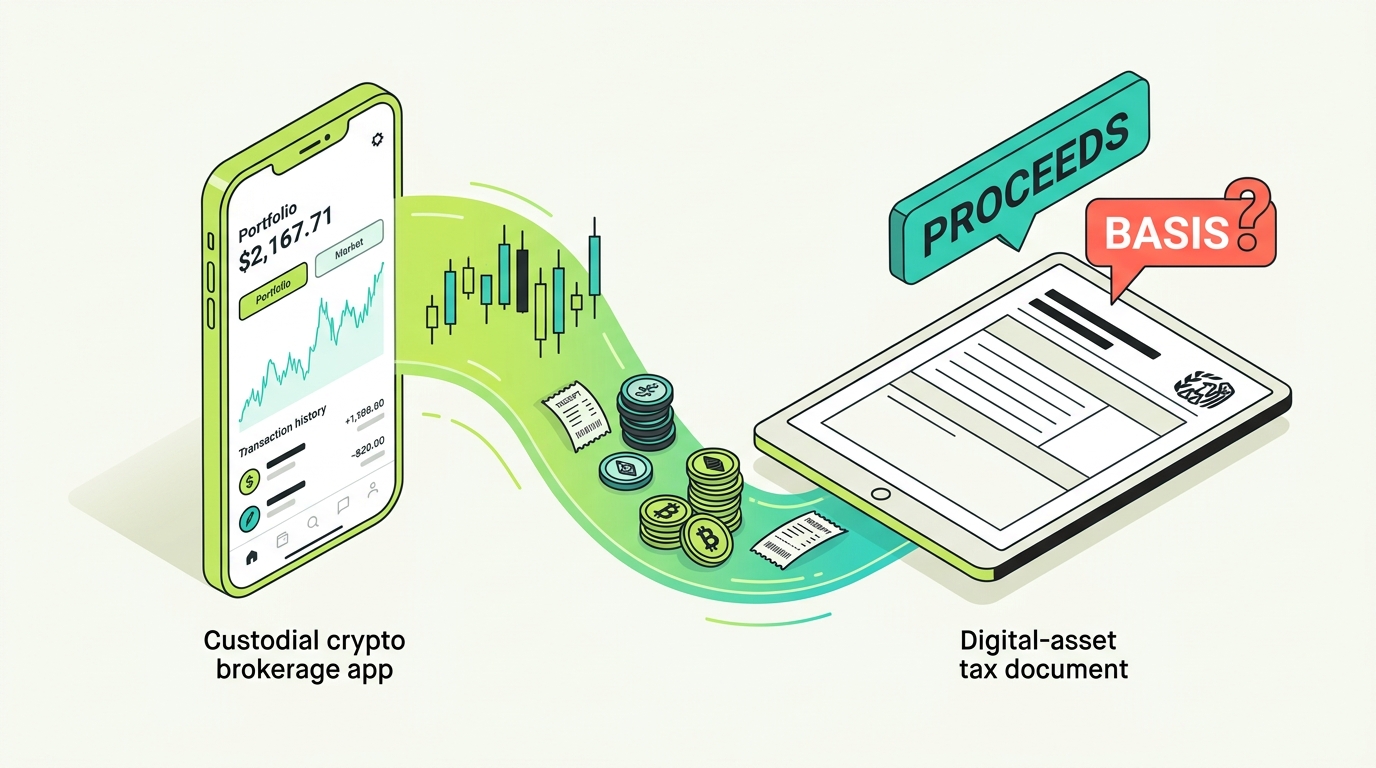
At its core, crypto trading has two distinct forms:
- Spot trading: You buy the actual coin and hold it in a wallet or on an exchange. You own the asset and can transfer it, spend it, or sell it later.
- Derivatives trading: You take a position on price direction without owning the coin. Contracts for difference (CFDs), futures, and perpetual swaps fall into this category. These are typically leveraged, meaning you post a fraction of the position value as margin.
The distinction matters because ownership, tax treatment, and risk exposure differ sharply between the two. A spot buyer can lose only what they paid. A leveraged trader can lose more than their initial deposit if the market moves against them.
How Crypto Markets Work

Crypto Trading Explained: How It Works in 2026 - How Crypto Markets Work.
Cryptocurrency markets are decentralised. No central bank issues Bitcoin or Ethereum, and no single authority sets their price. Instead, prices emerge from supply and demand across many venues simultaneously.
Underneath, a blockchain records ownership. Transactions are grouped into blocks, verified by network participants, and linked cryptographically to previous blocks. That design makes records transparent and extremely difficult to alter, but it does not make prices stable.
Key mechanics to understand
- Spread: The gap between the buy (ask) and sell (bid) price. Tighter spreads reduce your cost per trade.
- Lots: Standardised trade sizes. Crypto lots are often just one unit because volatility is high.
- Liquidity: How easily you can enter and exit without moving the price. Deep order books mean better fills.
- Volatility: Prices can move several percent within hours, which magnifies both opportunity and risk.
Where Crypto Trading Happens

Crypto Trading Explained: How It Works in 2026 - Where Crypto Trading Happens.
There are three main venues, and each suits a different type of participant.
Centralised exchanges
Platforms where you deposit funds, complete identity verification (KYC), and trade against an order book. They offer fiat on-ramps, custody of your assets while deposited, and tools like stop-loss orders. Examples include large global exchanges that support hundreds of trading pairs.
Brokers and derivative platforms
Some providers let you speculate on crypto prices through CFDs without ever holding the token. These are leveraged products, so profits and losses are calculated on the full position size, not just your margin. Regulators in several jurisdictions require risk warnings for exactly this reason.
Decentralised and peer-to-peer venues
Here, buyers and sellers transact directly through smart contracts or self-custody wallets. You keep your private keys, but you also carry full responsibility for security and for verifying counterparties.
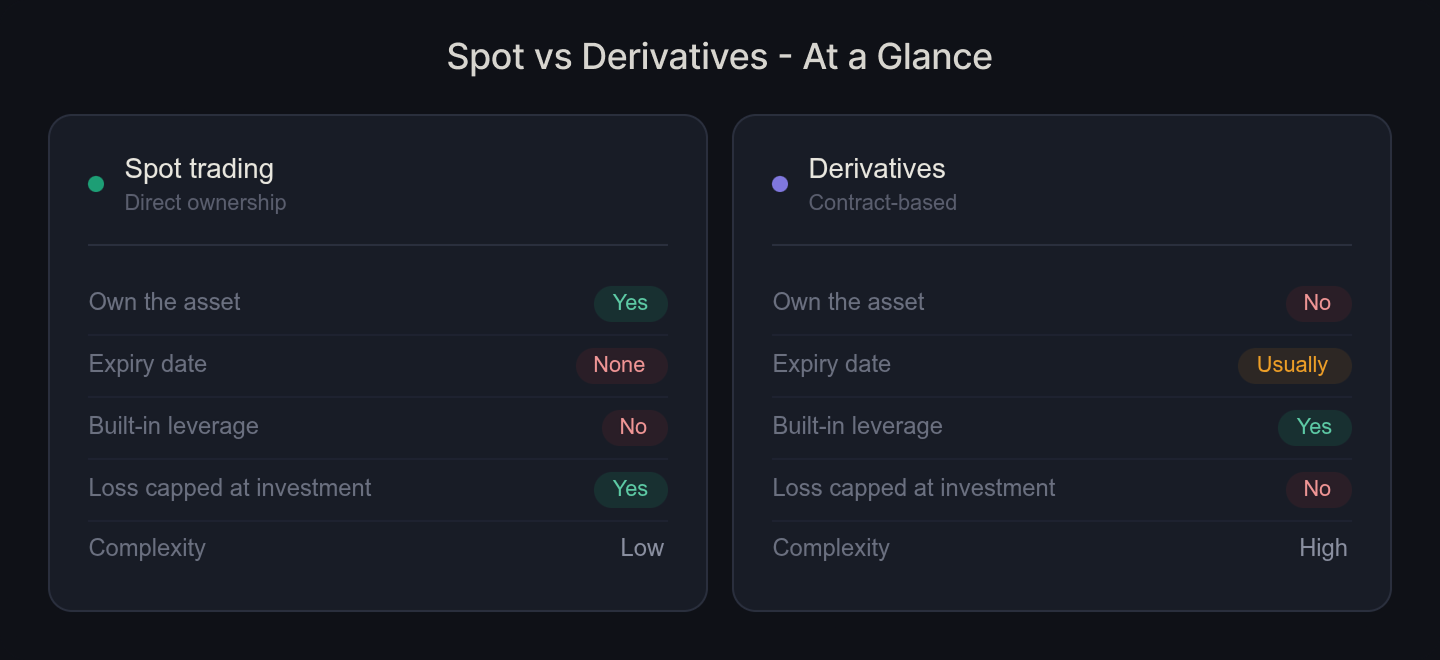
Spot vs Leverage: A Practical Comparison
Crypto Trading Explained: How It Works in 2026 - Spot vs Leverage: A Practical Comparison.
| Factor | Spot trading | Leveraged derivatives |
|---|---|---|
| Ownership | You own the coin | You own a contract |
| Capital required | Full trade value | Margin only |
| Maximum loss | Your invested amount | Can exceed your deposit |
| Custody | Exchange or self-custody | Platform-controlled |
| Best for | Long-term holders, spenders | Active short-term speculators |
If your goal is to hold value and eventually use it, spot is the simpler path. If your goal is to trade short-term moves, understand that leverage cuts both ways.
The Risks Every Trader Should Price In
- Volatility risk: Large price swings can trigger liquidation on leveraged positions.
- Custody risk: Funds left on an exchange depend on that exchange's security and solvency.
- Regulatory risk: Rules differ by country and change over time. Some venues operate under specific licences; others do not.
- Operational risk: Wrong address, wrong network, or a lost private key can mean permanent loss.
- Liquidity risk: Thin markets can produce slippage and worse execution than expected.
None of these can be eliminated entirely. They can be managed with position sizing, diversification across venues, and clear rules for when to exit.
Crypto Trading vs Crypto Spending
Trading is only one side of the digital-asset economy. A growing number of companies hold stablecoins such as USDT and USDC not to speculate, but to pay for things: cloud infrastructure, AI tool subscriptions, digital advertising, and supplier invoices.
This is a different discipline. Instead of chasing price, businesses want predictability. Stablecoins are designed to hold a value close to one US dollar, which makes them practical for budgeting and settlement. You can read more about how that works in our guide to the USDC price and why it stays near $1.
For companies that need to convert stablecoin balances into everyday corporate spending, platforms such as Cardfornia provide crypto virtual cards for businesses. A single account can be funded with stablecoins, and multi-currency virtual cards can be issued to team members with real-time controls on where and how funds are spent. This is a settlement and expense-management use case, not a trading strategy.
If your team pays for SaaS, ads, or travel across borders, the operational questions are different from a trader's: how fast does settlement clear, what currencies are supported, and who can approve spend. Our breakdown of the multi-currency crypto card model for businesses covers those criteria in detail.
Choosing a Platform: What to Check
Whether you are trading personally or moving stablecoins for business, the evaluation checklist overlaps more than people expect.
- Licensing and registration: Which regulator supervises the entity you are dealing with?
- Custody model: Are client funds segregated? Are they ever lent out or reinvested?
- Fee structure: Trading fees, spreads, conversion costs, and withdrawal charges.
- Supported assets and currencies: Does it cover the pairs or currencies you actually use?
- Security posture: Standards such as ISO/IEC 27001, plus how keys and accounts are protected.
- Withdrawal reliability: How quickly can you get funds out, and under what conditions?
For a side-by-side view of how corporate card providers differ on stablecoin funding and team controls, see our Cardfornia vs OneSafe vs Sparados comparison.
A Simple Workflow for Beginners
- Define your objective. Holding, active trading, or operational spending are three different goals.
- Choose the venue type. Exchange for spot, broker for derivatives, or a business platform for corporate spend.
- Complete verification. KYC is standard on regulated platforms.
- Fund your account. Bank transfer, card, or on-chain transfer, depending on the venue.
- Set risk rules before you trade. Position size, stop levels, and a maximum drawdown you can tolerate.
- Record everything. Trade logs and expense records matter for tax and for improving your process.
Related reading
- Cross-Border Procurement Crypto: 2026 Business Guide - How cross-border procurement crypto works for businesses in 2026: stablecoin settlement, supplier payouts, corporate cards, FX risk, and controls.
- Cardfornia vs OneSafe vs BVNK: 2026 Crypto Card Comparison - Cardfornia vs OneSafe vs BVNK compared for 2026: stablecoin funding, corporate virtual cards, multi-currency accounts, and global payment infrastructure.
- USDT Virtual Card: How Stablecoin Business Spending Works - Learn how a USDT virtual card turns stablecoins into corporate spend for ads, SaaS, and travel, plus how to evaluate providers in 2026.
Sources and further reading
- What is Cryptocurrency Trading and How Does it Work? - IG - Cryptocurrency trading explained. Crypto trading is the act of speculating on cryptocurrency price movements. Learn more about how cryptocurrency trading works.
- Crypto.com: Buy, Sell, Trade Crypto, Stocks & More - Buy, sell, store, and trade over 400+ cryptocurrencies on Crypto.com, a secure and trusted crypto exchange platform in Singapore.
- Trade Crypto with OANDA & Paxos | Secure crypto trading platform - Buy, sell, trade, and exchange cryptocurrencies through our partnership with Paxos using OANDA’s user-friendly platform, our powerful trading tools, and low-cost account funding.
FAQ
Is crypto trading the same as investing?
Not exactly. Investing usually implies a longer holding period and a thesis about value. Trading focuses on shorter-term price movements. Many people do both, but the risk management differs.
Do I need leverage to trade crypto?
No. Spot trading requires no leverage at all. Leverage increases exposure and increases the chance of large losses, including losses beyond your deposit.
How are crypto trades taxed?
Treatment varies by country and depends on whether you traded spot, used derivatives, or received crypto as payment. Consult a local tax professional.
Can businesses use crypto without trading it?
Yes. Companies commonly hold stablecoins for settlement and convert them into operational spending through corporate cards and payment platforms, avoiding speculative exposure.
What is the biggest mistake new traders make?
Trading without a plan. Position sizing, exit rules, and a clear reason for each trade matter more than any indicator.
Conclusion
Crypto trading comes down to two questions: do you want to own the asset, or do you want to speculate on its price? Spot trading answers the first. Leverage and derivatives answer the second, with proportionally higher risk. Understanding spreads, liquidity, custody, and regulation is what separates a structured approach from guesswork.
And trading is not the only way to engage with digital assets. For businesses, stablecoins increasingly function as working capital: a way to settle invoices, pay for software, and fund team spending across borders. Whether you are placing your first spot order or setting up corporate stablecoin payments, the same principle applies. Know the mechanics, know the risks, and choose infrastructure that matches your actual goal.