
USDCAD Explained: Rate Drivers and Business FX Strategy
USDCAD Explained: What Moves the USD/CAD Rate and How Businesses Manage It
USDCAD is the forex ticker for the U.S. dollar versus the Canadian dollar. It answers a simple question: how many Canadian dollars does it take to buy one U.S. dollar? If USDCAD trades at 1.41, one USD costs 1.41 CAD. For traders, that number is a position. For businesses with costs or revenue on both sides of the border, it is a budgeting input that changes every day.
This guide explains how the pair is quoted, what actually moves it, how to read a USDCAD forecast without over-trusting it, and how crypto-native companies can reduce friction when their revenue is in stablecoins but their bills are in CAD, USD, or both.
What USDCAD Actually Means
USDCAD Explained: Rate Drivers and Business FX Strategy - What USDCAD Actually Means.
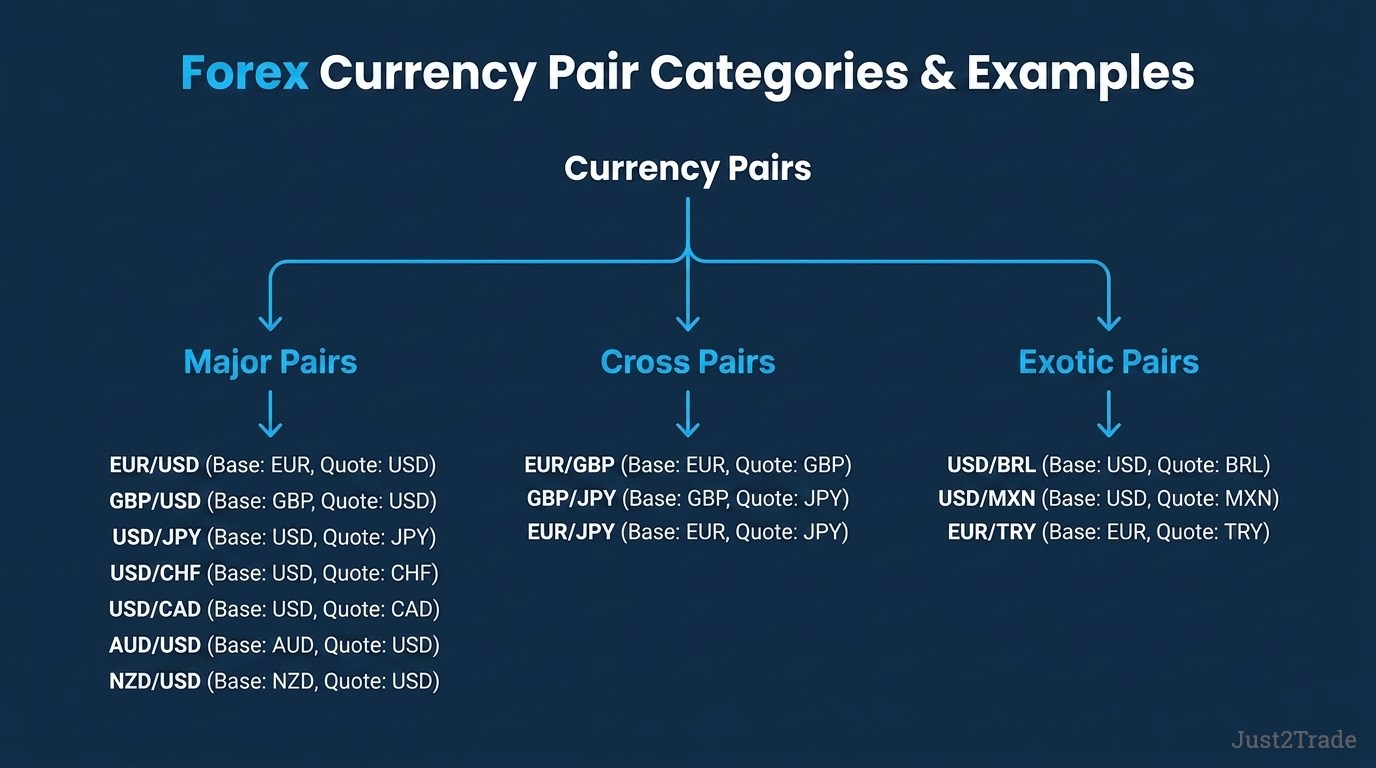
USDCAD is a major currency pair — a popular currency quoted against the U.S. dollar. The quote convention matters:
- Base currency: USD (the first currency)
- Quote currency: CAD (the second currency)
- Reading the price: 1.4140 means 1 USD = 1.4140 CAD
- Direction: A rising USDCAD means the U.S. dollar is strengthening against the Canadian dollar, or the Canadian dollar is weakening. A falling USDCAD means the opposite.
This trips people up constantly. A "stronger" USDCAD is not good news for a Canadian exporter selling into the U.S. — their USD revenue converts into fewer CAD. It is good news for a Canadian company paying U.S. suppliers, because each CAD buys more USD.
You will see the pair written three ways: USDCAD, USD/CAD, and CAD=X on quote pages. They refer to the same exchange rate.
Why USDCAD Moves: The Core Drivers

USDCAD Explained: Rate Drivers and Business FX Strategy - Why USDCAD Moves: The Core Drivers.
Forex rates are relative prices, so anything that changes the attractiveness of holding USD versus CAD shows up in the pair.
Interest Rate Differentials
This is the dominant medium-term driver. When U.S. rates are higher relative to Canadian rates, USD-denominated assets yield more, capital tends to flow toward USD, and USDCAD generally rises. When the gap narrows or reverses, the pair often falls. Central bank guidance — not just the current rate — moves the market, because traders price in expected future policy.
Oil and Commodity Prices
Canada is a major energy exporter, so the Canadian dollar has a historical link to crude oil. Stronger oil prices tend to support CAD and weigh on USDCAD. The relationship is not mechanical and has weakened in some periods, but it remains part of how the market frames CAD.
Risk Sentiment and the U.S. Dollar's Safe-Haven Role
In periods of global stress, capital often moves into USD for liquidity and safety, pushing USDCAD higher. In calmer, risk-on environments, that flow can reverse.
Trade Flows and Economic Data
The U.S. and Canada trade heavily with each other, so relative growth matters. Watch U.S. and Canadian inflation prints, employment reports, GDP, and central bank statements. A single hot inflation reading can reprice rate expectations and move the pair within minutes.
Positioning and Liquidity
USDCAD is liquid, but it is not infinitely deep. Large speculative positioning, month-end rebalancing, and options expiries around round numbers can create short-term distortions that have nothing to do with fundamentals.
How to Read a USDCAD Forecast Without Being Misled
USDCAD Explained: Rate Drivers and Business FX Strategy - How to Read a USDCAD Forecast Without Being Misled.
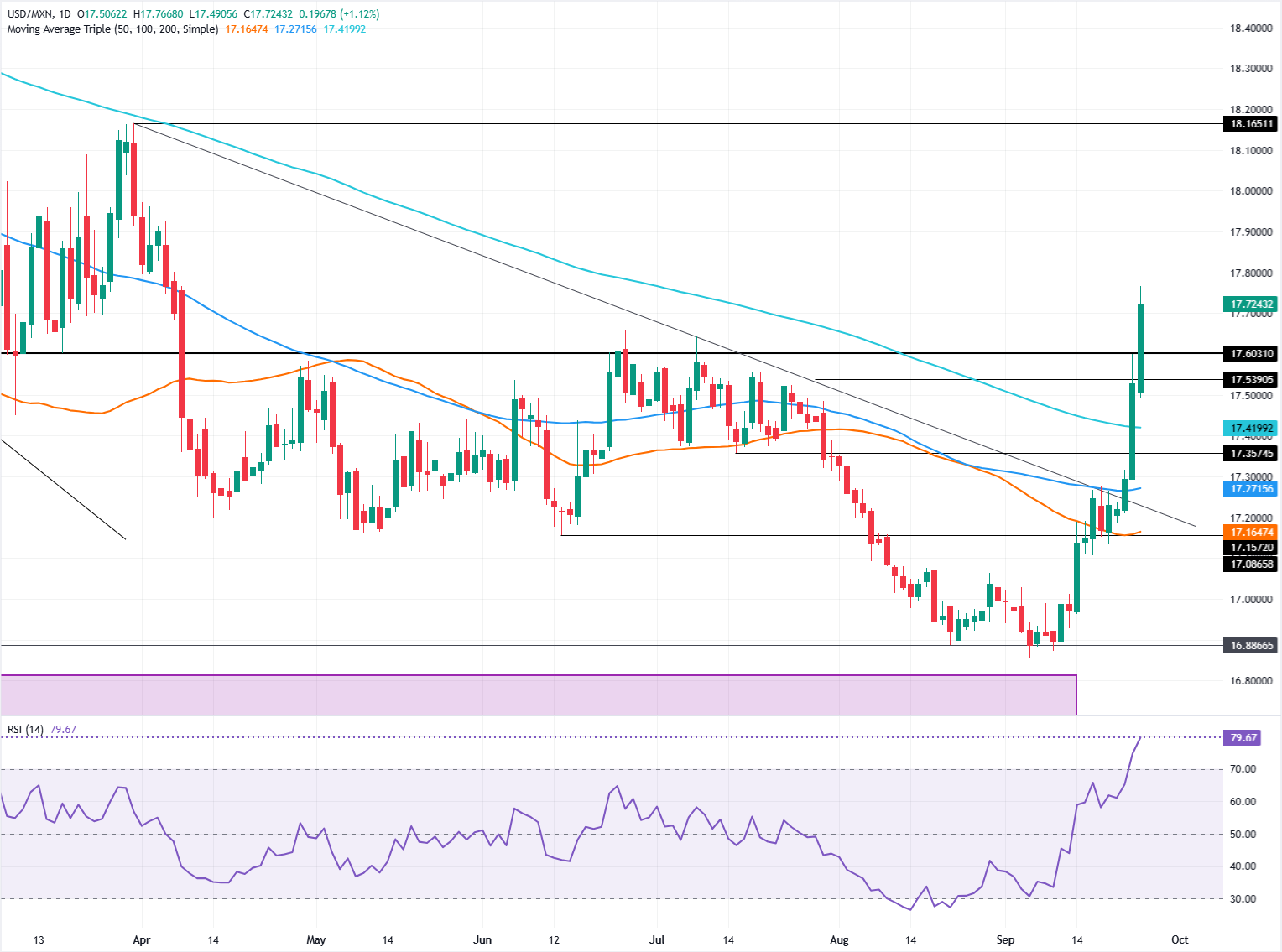
Quote pages and charting platforms publish technical ratings — buy, strong buy, sell — based on moving averages and momentum indicators. These are useful as a summary of recent price behavior, not as predictions.
A practical way to use them:
- Separate timeframes. A one-week "buy" signal and a one-month "strong buy" signal can coexist with a very different one-year picture. Know which horizon matches your decision.
- Check volatility before you act. A volatility rating near 0.15% on a daily basis sounds small, but it compounds. A 1.5% annual move is normal noise; a 3% move in a month changes your budget.
- Anchor to fundamentals. If technicals say buy but rate differentials and oil are pointing the other way, treat the signal as a timing tool, not a thesis.
- Never treat a forecast as a plan. Forecasts are conditional. Your hedging or budgeting decision should survive being wrong.
For live pricing and charts, see TradingView's USDCAD page and Investing.com's USD/CAD quote. Both show the current rate, daily range, and historical context.
What USDCAD Means for a Business Budget
Here is where the pair stops being abstract. Consider three common scenarios.
Scenario 1: A Canadian startup paying U.S. SaaS vendors
Your revenue is in CAD, but AWS, Figma, and your ad platforms bill in USD. If USDCAD rises from 1.38 to 1.41, your effective USD costs drop by roughly 2% in CAD terms. If it falls to 1.35, your costs rise. On a $50,000 annual USD software bill, that swing is about $2,000 — real money that never appears in a vendor invoice.
Scenario 2: A U.S. company with Canadian contractors
You pay in CAD but hold USD. A weaker CAD (higher USDCAD) means your payroll converts into more CAD for the same USD outlay. A stronger CAD does the reverse.
Scenario 3: A crypto-native company holding stablecoins
Your treasury is in USDT or USDC, which are pegged to the U.S. dollar. That means your balance sheet is effectively long USD. If you have CAD obligations, you carry the same USDCAD exposure as any dollar-funded business — but you may have fewer traditional banking tools to manage it. This is a gap that stablecoin-based corporate infrastructure is starting to close; see our guide to fiat-backed stablecoins for how reserves and redemption work.
Managing USDCAD Exposure in Practice
You do not need a trading desk to reduce currency risk. You need to know your exposure and pick a tool that matches it.
Step 1: Map your currency mismatch
List recurring costs by currency. Most software, cloud, and ad spend is USD-denominated even for non-U.S. companies. If your revenue is CAD, EUR, or SGD, you have a structural mismatch.
Step 2: Decide whether to hedge or absorb
- Absorb: Accept the volatility if the amounts are small relative to revenue. Simple, but it hides cost drift.
- Hedge: Use forwards or options for large, predictable obligations. Effective, but adds operational overhead and counterparty requirements.
- Match: Hold funds in the currency you spend. This is the most underrated option and often the cheapest.
Step 3: Use multi-currency payment tools
For operating expenses, matching currency at the payment layer is often more practical than financial hedging. A multi-currency virtual card can be issued in the currency a vendor bills in, so a USD subscription is settled in USD rather than converted twice — once when you fund the card and again when the vendor charges it.
This is where crypto corporate cards fit. Platforms such as Cardfornia let a business fund one account with stablecoins like USDT and USDC, then issue multi-currency virtual cards to teams. For a company whose treasury is already in stablecoins, that removes a conversion step and makes the USD exposure explicit rather than accidental. Our startup founder crypto card guide covers what to check before issuing cards to a team.
Step 4: Review monthly, not daily
Daily rate-watching leads to reactive decisions. A monthly review of actual FX costs — what you budgeted versus what you paid — tells you whether your approach is working.
USDCAD Versus USDC: A Naming Trap Worth Avoiding
USDCAD and USDC are easy to confuse, and the confusion can be expensive.
| Term | What it is | What it measures |
|---|---|---|
| USDCAD | A forex currency pair | USD versus CAD exchange rate |
| USDC | A stablecoin issued by Circle | A digital token designed to track USD |
| USDT | A stablecoin issued by Tether | A digital token designed to track USD |
USDCAD moves constantly with the market. USDC and USDT are designed to hold a 1:1 value against the U.S. dollar, though they carry issuer, reserve, and regulatory risks that a bank deposit does not. If your business holds USDC and pays Canadian vendors, you still face USDCAD risk when converting — the stablecoin removes crypto volatility, not currency volatility. Our USDC conversion guide walks through the mechanics, fees, and settlement timing.
Common Mistakes Businesses Make With USDCAD
- Budgeting at a single rate for a full year. Rates move. Build in a buffer or revisit quarterly.
- Assuming stablecoins eliminate FX risk. They eliminate crypto price risk against USD, not USD-to-CAD risk.
- Paying in the wrong currency to save a fee. A 1% conversion fee is cheaper than a 3% adverse rate move.
- Ignoring the rate on small recurring charges. Subscriptions renew monthly. Small amounts compound into a meaningful annual line item.
- Treating a technical rating as a forecast. Buy and sell signals describe the past.
Related reading
- Convert USDC: A Practical 2026 Guide for Businesses - Learn how to convert USDC across exchanges, wallets, and payment platforms, compare fees and settlement speed, and see how crypto-native businesses use USDC for corporate spending.
- Startup Founder Crypto Card: 2026 Guide to Corporate Spending - How startup founders use crypto cards to spend stablecoins on SaaS, ads, and travel — plus what to check before issuing team cards.
- Crypto Prepaid Cards: The Complete 2026 Business Guide - Compare crypto prepaid cards for business: how they work, top options, fees, and why corporate virtual cards like Cardfornia matter for teams.
Sources and further reading
- USD/CAD (CAD=X) Live Rate, Chart & News - Yahoo Finance - Find the latest USD/CAD (CAD=X) currency exchange rate, plus historical data, charts, relevant news and more
FAQ
What does USDCAD mean?
USDCAD is the exchange rate showing how many Canadian dollars are needed to buy one U.S. dollar. A rate of 1.41 means 1 USD equals 1.41 CAD.
Is a higher USDCAD good or bad?
It depends on your position. A higher USDCAD helps anyone paying USD with CAD income, because their CAD buys more USD. It hurts anyone receiving USD and converting to CAD.
What moves the USD/CAD rate the most?
Interest rate differentials between the U.S. Federal Reserve and the Bank of Canada are the primary driver over months. Oil prices, risk sentiment, and economic data releases drive shorter-term moves.
Can I forecast USDCAD reliably?
No. Forecasts are conditional scenarios, not predictions. Technical ratings summarize recent momentum; fundamentals explain the broader direction. Use both as inputs, not answers.
Does holding USDC protect me from USDCAD risk?
No. USDC is designed to track the U.S. dollar, so holding it is economically similar to holding USD. If your obligations are in CAD, you still carry USD/CAD exposure.
How do businesses reduce USDCAD exposure on operating costs?
Three common approaches: absorb the volatility if amounts are small, hedge large predictable obligations with forwards, or match currency at the payment layer using multi-currency accounts and virtual cards.
The Bottom Line
USDCAD is not just a trader's ticker. It is the price at which cross-border business gets done between two of the world's most connected economies. Understanding what drives it — rate differentials first, oil and sentiment second — turns a volatile number into a manageable planning input.
For crypto-native businesses, the practical move is to make your currency exposure visible. If your treasury is in stablecoins and your bills are in USD and CAD, you are already exposed to USDCAD whether or not you track it. Matching currency at the payment layer, reviewing actual FX costs monthly, and choosing infrastructure that supports multi-currency settlement will do more for your margins than any forecast. For teams comparing options, our crypto prepaid card business guide breaks down how these tools differ.